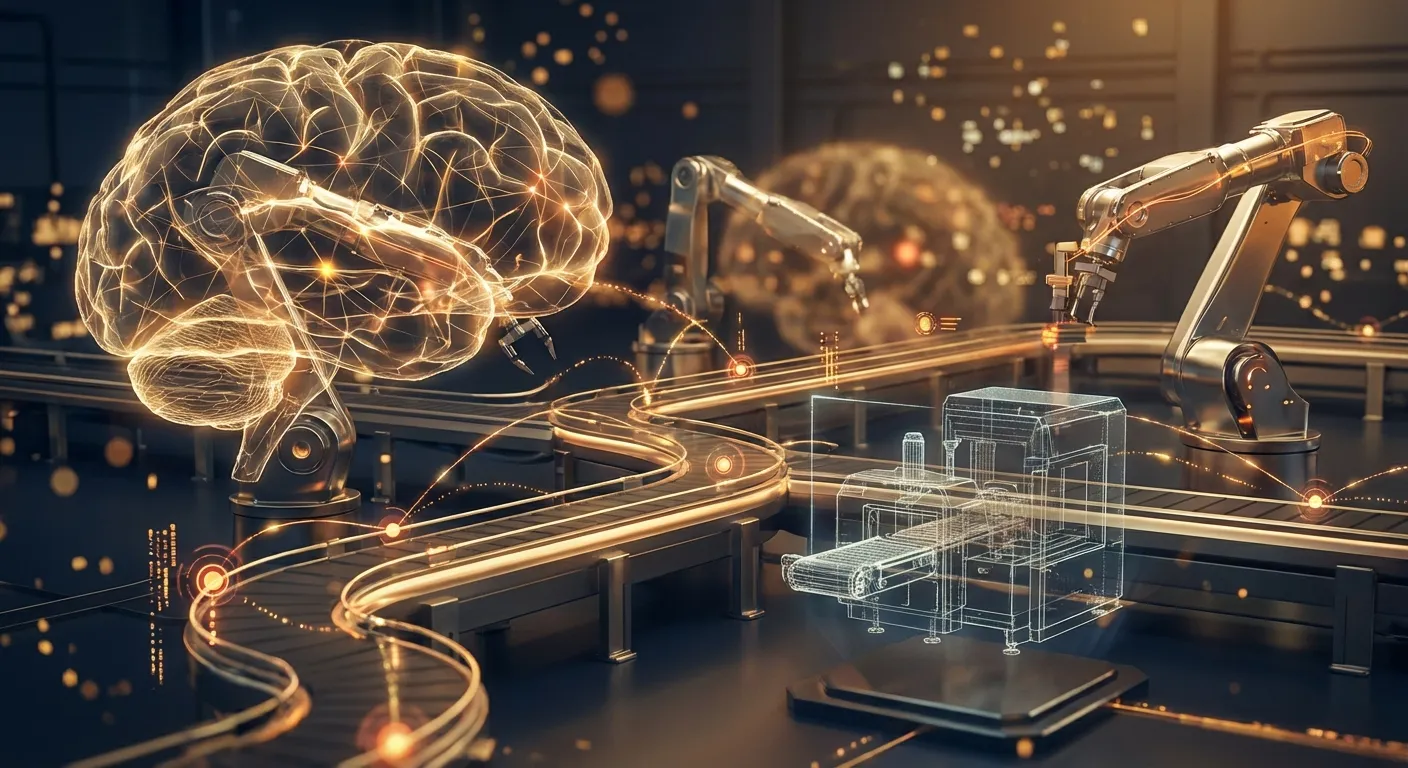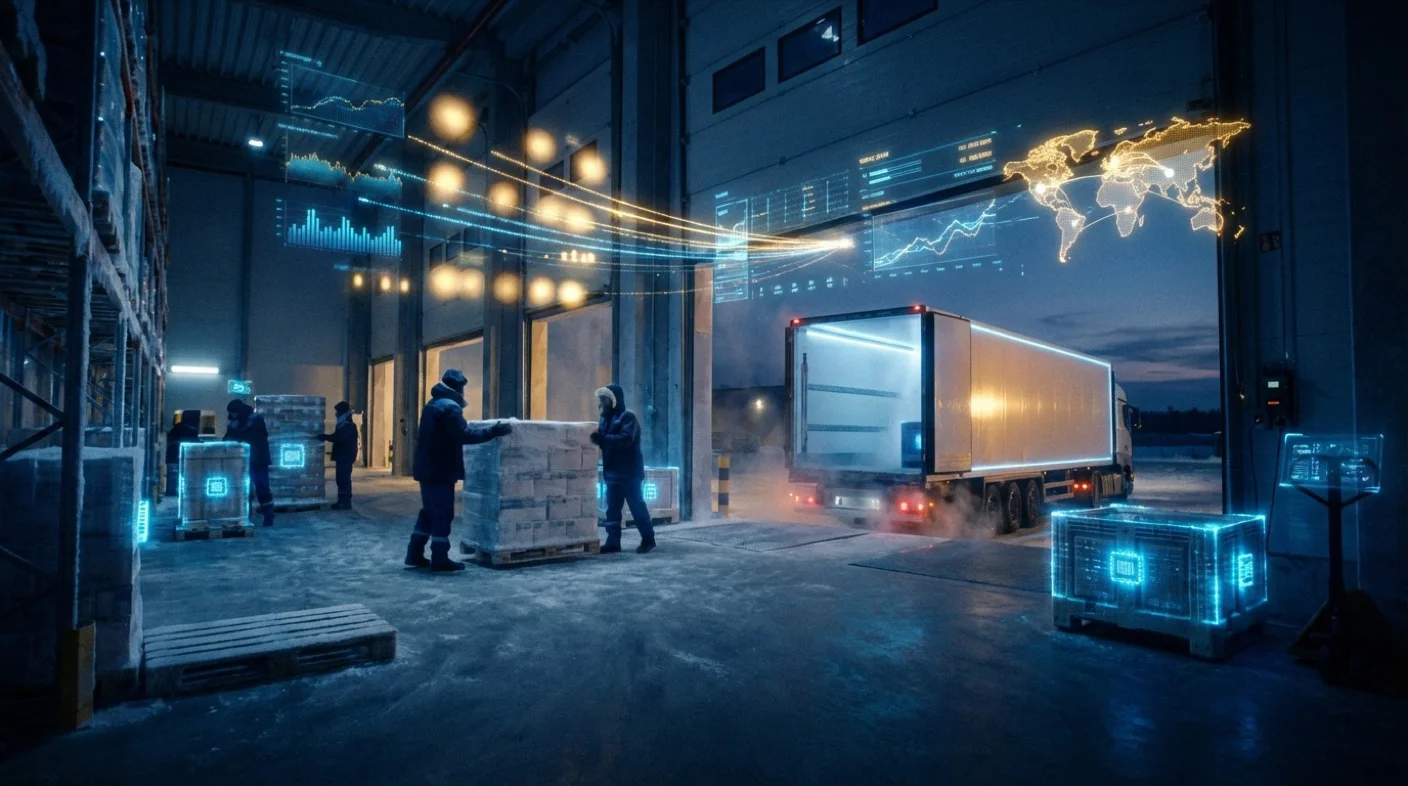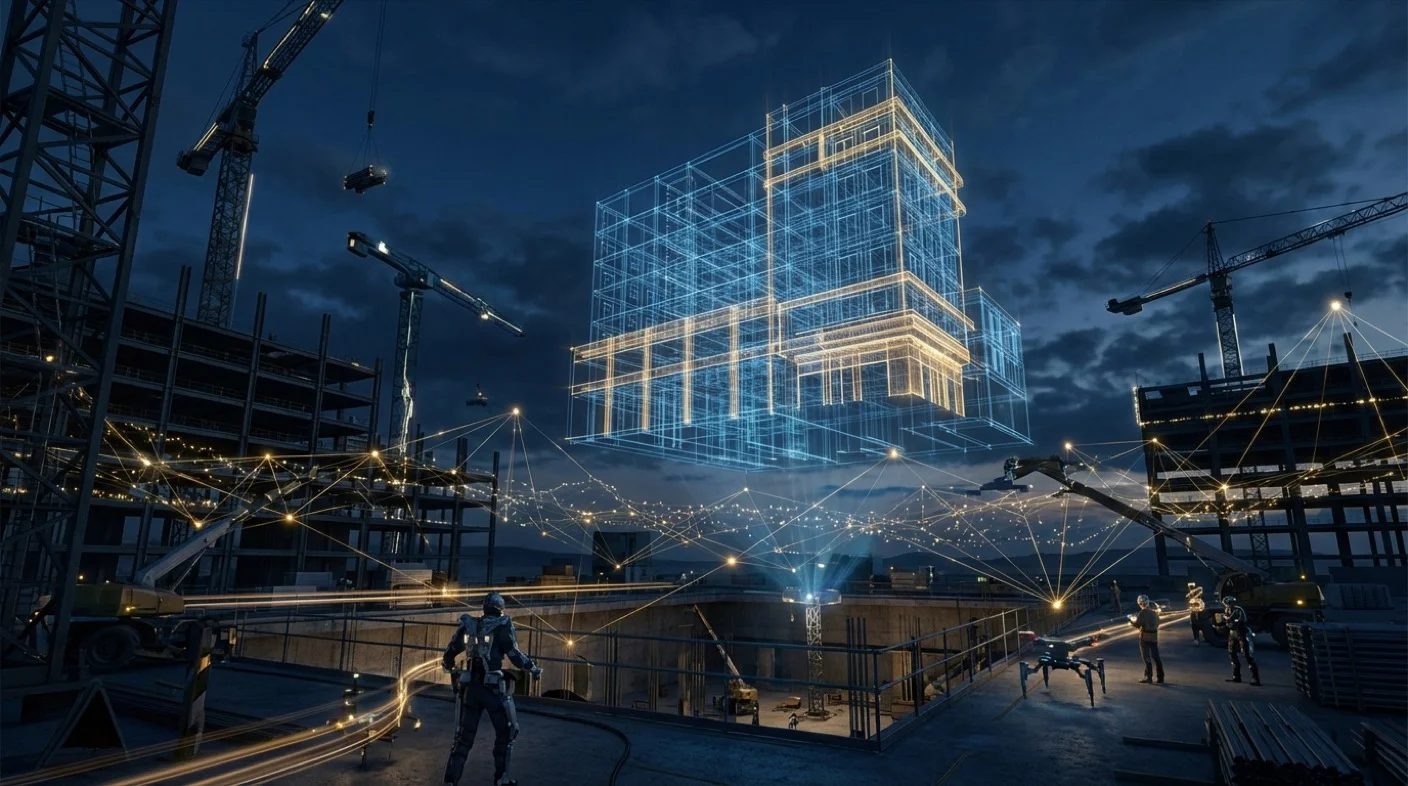
- McKinsey research indicates that enterprises with fully deployed AI across the supply chain can reduce logistics costs by 15–30% while shrinking inventory levels by 20–50% and reducing stockout rates by 65%[5]
- Transformer architecture-based demand forecasting models achieve 20–40% higher prediction accuracy compared to traditional time series methods (ARIMA, exponential smoothing), with particularly significant performance in high-volatility and new product category scenarios[1]
- Gartner estimates that by 2026, over 75% of large enterprises will deploy some form of AI or advanced analytics in supply chain management, accelerating the shift from demand sensing to autonomous decision-making across the entire chain[7]
- Supply chain digital twins enable enterprises to simulate disruption scenarios in virtual environments, reducing supply disruption response time from weeks to hours and significantly enhancing supply chain resilience[4]
1. Supply Chain Resilience Challenges in the Post-Pandemic Era
1.1 From Efficiency-First to Resilience-First
Over the past three decades, global supply chain design philosophy has centered on "Lean" — zero inventory, just-in-time delivery (JIT), single-source suppliers — with the goal of maximizing cost reduction. However, the COVID-19 pandemic thoroughly exposed the fragility of this system. From chip shortages halting global automotive production, port congestion causing consumer goods stockouts, to dramatic raw material price fluctuations, the "Ripple Effect" of supply chain disruptions propagated downstream at speeds and scales far exceeding expectations. Ivanov and Dolgui systematically analyzed this phenomenon in Annals of Operations Research[4], pointing out that traditional linear supply chain models cannot capture the nonlinear propagation paths of multi-tier disruptions, and that AI-driven simulation and real-time sensing capabilities are essential for effective response.
Belhadi et al. further summarized in their Annals of Operations Research study[2] four structural challenges facing post-pandemic supply chains: First, intensified demand uncertainty — shifts in consumer behavior (surging online shopping, increased demand volatility) have caused traditional forecasting model accuracy to decline sharply; Second, diversified supply-side risks — geopolitical conflicts, extreme weather events, and pandemic recurrences mean a single risk source is insufficient to describe the full threat landscape; Third, unpredictability of lead times — ocean shipping transit times shifted from stable weeks pre-pandemic to months of uncertainty; Fourth, sustainability compliance pressure — carbon footprint tracking and ESG disclosure requirements have multiplied supply chain management complexity.
1.2 AI as Infrastructure for Supply Chain Resilience
Facing these challenges, AI is no longer just an "icing on the cake" efficiency tool — it is the core infrastructure for building supply chain resilience. Toorajipour et al. in their systematic literature review in the Journal of Business Research[1] identified five core AI capabilities in supply chains: real-time demand sensing, dynamic inventory optimization, smart warehouse automation, delivery route optimization, and supplier risk early warning. The common characteristic of these capabilities is the shift from "reactive response" to "proactive foresight" — detecting anomalous signals and triggering contingency mechanisms before problems occur.
McKinsey's industry report[5] corroborates the investment return of AI in supply chains from a business value perspective: enterprises adopting AI can reduce logistics costs by an average of 15%, lower inventory levels by 35%, and simultaneously improve service levels by 65%. However, the report also warns that fewer than 20% of enterprises successfully scale from AI pilots to full supply chain deployment, with the biggest obstacles being not technology but data silos, organizational inertia, and lack of cross-departmental collaboration. This article will dissect the technical principles and practical implementation methods of AI across each supply chain segment, providing enterprises with a complete roadmap from concept to practice.
2. AI Demand Forecasting: From Time Series to Transformers
2.1 The Limits of Traditional Forecasting Methods
Demand forecasting is the starting point of supply chain management — if forecasts are inaccurate, all subsequent procurement, production, inventory, and distribution plans lose their foundation. Traditional statistical forecasting methods — ARIMA, Exponential Smoothing, Holt-Winters — perform adequately under stable demand patterns but struggle with post-pandemic high volatility. These methods share a common assumption that "the future is a continuation of the past," and when external shocks (promotional activities, competitor dynamics, sudden events) break historical patterns, models produce severe deviations.
Toorajipour et al.[1] point out in their systematic review that the fundamental advantage of AI forecasting methods lies in their "multi-source data fusion" capability — using not only historical sales data but also integrating weather forecasts, economic indicators, social media trends, competitor price changes, and even satellite imagery (such as estimating retail demand from parking lot traffic flow) to construct a multi-dimensional demand sensing network. Salcedo-Sanz et al. demonstrated multi-source information fusion techniques for earth observation in Information Fusion[3], with methodologies equally applicable to multi-source demand sensing in supply chains.
2.2 Deep Learning and Transformer Forecasting Models
In the deep learning domain, demand forecasting technology has evolved through three generations. The first generation, represented by recurrent neural networks (LSTM and GRU), excels at capturing long-term dependencies in time series but has limited scalability in multivariate scenarios. The second generation introduced attention mechanisms, such as DeepAR and N-BEATS, enabling models to dynamically focus on the most relevant historical time periods for current predictions, significantly improving forecasting accuracy in promotional cycles and seasonal transitions. The third generation marks the full entry of Transformer architectures — Temporal Fusion Transformer (TFT) and Informer models leverage self-attention mechanisms to simultaneously process interactions across multiple time scales and variables, demonstrating state-of-the-art performance in multi-horizon forecasting tasks.
From a practical deployment perspective, demand forecasting system design requires several key decisions. First is forecasting granularity — SKU level, category level, or channel level? Finer granularity requires more historical data and increases the risk of overfitting; coarser granularity yields more stable models but offers limited support for individual SKU inventory decisions. In practice, "hierarchical forecasting" is commonly used — modeling at the category level first, then proportionally disaggregating to the SKU level, balancing accuracy and stability. Second is update frequency — static monthly forecasts are no longer sufficient for rapidly changing markets, and leading enterprises are moving toward "daily rolling forecasts" or even "real-time demand sensing," dynamically adjusting short-term forecasts based on intraday order inflows[7].
2.3 Demand Sensing Technology
Demand sensing is an advanced application of demand forecasting, with the core idea of using "real-time signals" to correct "statistical forecasts." Traditional forecasting relies on extrapolation from historical data, while demand sensing integrates recent (past few days to weeks) order trends, POS data, e-commerce traffic, and even social media brand sentiment to dynamically adjust short-term forecast values. Belhadi et al.[2] show that forecasting systems integrating demand sensing can reduce MAPE (Mean Absolute Percentage Error) in short-term (1–4 week) forecasts to 10–15%, a significant improvement over traditional methods' 25–40%.
In Taiwan's FMCG and electronic components industries, the value of demand sensing is particularly prominent. Terminal demand for electronic components is driven by multiple factors including consumer electronics product launch cycles, gaming console generational changes, and automotive electrification trends, and traditional order forecasting often lags actual demand changes by 2–4 weeks. After deploying AI demand sensing systems, enterprises can reduce "order-to-shipment" response time from weeks to days, gaining a competitive edge in the rapidly changing electronics supply chain.
3. Inventory Optimization and Dynamic Safety Stock Adjustment
3.1 From Fixed Safety Stock to Dynamic Inventory Strategies
Inventory is the "buffer" of the supply chain — too much inventory means capital tied up, rising warehousing costs, and obsolescence risk; too little inventory means stockouts, expensive emergency air freight, and customer loss. Traditional inventory management relies on classic formulas — Economic Order Quantity (EOQ) and Reorder Point (ROP) — using fixed safety stock levels to absorb demand fluctuations. However, these formulas assume demand follows a normal distribution and supply lead times are stable — two assumptions that rarely hold in today's environment.
AI-driven inventory optimization fundamentally changes this paradigm. McKinsey[5] research points out that advanced AI inventory systems possess three capabilities that traditional methods lack: First, dynamic safety stock — automatically adjusting each SKU's safety stock level daily based on real-time demand forecast confidence, supplier delivery reliability, and product lifecycle stage, rather than using a static number; Second, multi-echelon joint optimization — simultaneously optimizing inventory allocation across central warehouses, regional warehouses, and retail locations, rather than making independent decisions at each level; Third, scenario simulation — before making procurement decisions, simulating the impact on inventory under different scenarios (demand surge, supplier delays, promotional effects exceeding expectations), then selecting the decision that is resilient across all scenarios.
3.2 Reinforcement Learning in Inventory Decision-Making
Reinforcement learning (RL) has demonstrated enormous potential in inventory optimization in recent years. Unlike traditional optimization methods, RL models inventory management as a sequential decision problem: an agent observes the current inventory state, demand forecast, and supply conditions at each decision point, makes purchasing quantity decisions, and learns the optimal strategy based on long-term rewards (such as minimizing total holding cost + stockout cost). Silver et al. demonstrated breakthrough capabilities of reinforcement learning in complex strategy search in Nature[8], and the same methodology is being applied to multi-period inventory decision problems in supply chains.
RL's unique advantage in inventory management lies in its natural adaptability to "uncertainty." Traditional optimization methods require explicit assumptions about demand distributions (normal, Poisson, etc.), while RL can learn the true distributional characteristics of demand directly from historical data, including fat-tail effects, seasonal jumps, and structural breaks — scenarios that traditional methods struggle to handle. In multi-SKU, multi-warehouse joint inventory problems, RL can also effectively handle the curse of dimensionality challenge, finding near-optimal inventory strategies[4].
3.3 Inventory Visibility and Anomaly Detection
Beyond optimization decisions, another important AI application in inventory management is "anomaly detection." Anomalies lurking in inventory data — such as book-to-physical discrepancies, abnormal consumption patterns (potentially indicating theft or recording errors), and soon-to-expire obsolete stock — if not detected promptly, directly erode enterprise profits. AI anomaly detection models can automatically identify inventory behaviors deviating from normal patterns among thousands or even tens of thousands of SKUs, intercepting problems before they cause significant losses. Gartner[7] emphasizes that AI-enhanced supply chain visibility platforms free managers from "information overload," allowing them to focus on key anomalies and decision points flagged by AI.
4. Smart Warehousing: Robotics, Vision, and Path Planning
4.1 The Technology Spectrum of Warehouse Automation
Warehousing is one of the most labor-intensive segments of the supply chain — picking, packing, put-away, and inventory counting consume enormous amounts of labor. In Taiwan, the warehousing industry faces increasingly severe labor shortages, combined with the explosive growth of e-commerce orders, driving accelerated adoption of smart warehousing technologies.
The technology spectrum of smart warehousing ranges from low to high automation: barcode/RFID tracking systems, Automated Guided Vehicles (AGV) and Autonomous Mobile Robots (AMR), robotic arm picking, visual recognition sorting, and fully automated dark warehouses. Toorajipour et al.[1] point out that AI's role in warehousing is not merely driving individual equipment automation, but rather coordinating intelligent scheduling across the entire warehouse system — including dynamic slotting optimization, robot task scheduling, and human-robot collaboration workflow design.
4.2 Computer Vision Applications in Warehousing
Computer vision technology has three core applications in smart warehousing. First, automated inventory counting: drones or AMRs equipped with cameras navigate the warehouse, using image recognition technology to automatically read barcodes on shelves or directly identify product appearances, reducing full-warehouse inventory counting time from days of manual work to hours. Second, parcel dimension measurement: 3D vision systems can instantly measure parcel length, width, height, and weight, automatically selecting the most suitable box type and vehicle loading plan, improving load rates by 10–15%. Third, defect and damage detection: deploying vision systems at receiving stations to automatically identify damage, deformation, or labeling errors in outer packaging, preventing problematic products from entering inventory.
Belhadi et al.[2] particularly emphasize the value of AI vision systems in "logistics traceability" — when every parcel is recorded by vision systems at every node entering and leaving the warehouse, enterprises gain end-to-end logistics digital footprints, which not only improve operational visibility but also provide irrefutable visual evidence in case of disputes.
4.3 Path Planning and In-Warehouse Traffic Optimization
In large warehouses, pickers walk 15–20 kilometers daily, with over 60% of time spent walking rather than actually picking items. AI path planning algorithms — from classic Traveling Salesman Problem (TSP) solvers to reinforcement learning-based dynamic path planning — can dynamically generate the shortest picking routes based on the day's order structure, reducing picker walking distance by 25–40%. When warehouses simultaneously deploy AMRs, AI also needs to coordinate multi-robot task allocation and route planning, avoiding collisions and congestion — a typical multi-agent coordination problem[8].
"Dynamic slotting" is an upstream strategy for path optimization — placing high-frequency outbound products in storage locations near the shipping dock and low-frequency products in distant areas. AI models can automatically calculate optimal storage layouts based on historical outbound frequency, upcoming order forecasts, and product physical characteristics (weight, size, fragility), and dynamically adjust when demand patterns change. This seemingly simple optimization measure in practice often delivers 15–20% picking efficiency improvements.
5. Last-Mile Delivery Optimization
5.1 AI Solutions for the Vehicle Routing Problem (VRP)
"Last-mile delivery" is the most expensive segment of the entire supply chain — accounting for 40–50% of total logistics costs — and is also the most direct touchpoint for consumer experience. The Vehicle Routing Problem (VRP) is the core optimization problem in this segment: given vehicle capacity, time windows, traffic conditions, and driver work-hour constraints, how should optimal delivery routes be planned?
Traditional VRP solving relies on exact algorithms (such as branch-and-bound) or metaheuristic algorithms (such as genetic algorithms, ant colony optimization), but these methods suffer from rapidly increasing computation times as problem scale grows, and struggle to adapt in real time to dynamic changes like traffic accidents or ad hoc order insertions. In recent years, deep reinforcement learning-based VRP solvers have shown breakthrough progress — Attention Model (AM) and similar architectures model route planning as a sequential decision problem, with trained models capable of generating high-quality route plans in milliseconds and possessing real-time dynamic re-routing capability[8].
5.2 Real-Time Dynamic Delivery and ETA Prediction
Static route planning can no longer meet modern logistics demands — during delivery, new orders continuously arrive, traffic conditions constantly change, and customers may modify delivery times on short notice. AI-driven real-time dynamic delivery systems can continuously monitor these changes, recalculating optimal routes every few minutes, dynamically inserting new orders into existing routes while ensuring previously committed time windows are not violated.
Accurate Estimated Time of Arrival (ETA) prediction is critical for delivery experience. Consumers increasingly demand transparency about "where the package is now and when it will arrive." AI ETA models integrate historical delivery time data, real-time traffic conditions, weather forecasts, and delivery location characteristics (such as buildings requiring elevator access, communities requiring security notification) to reduce ETA prediction error from the traditional 30–60 minutes to 5–15 minutes. McKinsey's report[5] points out that precise ETA not only improves customer satisfaction but also enables enterprises to offer differentiated time-window services (such as "specified one-hour delivery"), creating additional service revenue.
5.3 Unmanned Delivery and Automation Trends
Unmanned delivery vehicles, delivery drones, and self-service pickup lockers are moving from concept to actual operations. Although fully autonomous unmanned delivery still faces significant regulatory and technical challenges, unmanned delivery has begun to scale in closed environments (such as university campuses, industrial parks) and short-distance delivery (such as community food delivery) scenarios. Gartner[7] predicts that within the next five years, unmanned delivery will handle 10–15% of short-distance urban logistics volume. In Taiwan, constrained by urban terrain complexity and regulatory progress, self-service pickup lockers and semi-automated delivery stations may be more pragmatic entry points.
6. Supplier Risk Assessment and Multi-Sourcing Strategies
6.1 AI-Driven Supplier Risk Early Warning
Supplier management is the front-line defense of supply chain resilience. Traditional supplier evaluation relies on annual audits and scorecard systems — this low-frequency, static assessment approach is severely lagging when facing sudden risks. When a supplier's financial condition deteriorates, a natural disaster strikes the factory location, or political developments lead to trade restrictions, enterprises often learn about it only after the supply disruption has already occurred.
AI-driven supplier risk early warning systems replace "periodic audits" with "continuous monitoring." These systems integrate multi-source data — supplier financial reports, credit rating changes, news sentiment analysis, weather forecasts, shipping tracking data, and even satellite imagery (monitoring factory area activity levels) — to construct a real-time updated supplier risk map. Ivanov and Dolgui[4] emphasize in their ripple effect research that supply chain risk propagation often travels through multi-tier indirect supplier paths — your tier-1 supplier may be solid, but the tier-2 and tier-3 suppliers they rely on could be hidden risk detonation points. AI can analyze multi-tier supply network structural vulnerabilities through Graph Neural Networks, identifying systemic risk nodes that are invisible on the surface.
6.2 Multi-Sourcing and Optimal Quota Allocation
Transitioning from single-source to multi-sourcing is a fundamental strategy for enhancing supply resilience, but finding the optimal procurement quota allocation that balances cost, quality, lead time, and risk diversification is a highly complex multi-objective optimization problem. AI's value in this scenario lies in its ability to simultaneously consider dozens of decision variables and constraints — each supplier's capacity limits, volume discount pricing tiers, historical quality performance, geographic dispersion, and various risk scenarios — to find Pareto-optimal quota plans.
Belhadi et al.[2] indicate that AI-enhanced multi-sourcing strategies not only improve supply resilience but can also reduce procurement costs by 5–10% through dynamic price comparison and strategic volume allocation. In Taiwan's electronics manufacturing supply chain, where many key components (such as passive components, connectors, IC substrates) have highly concentrated suppliers, deploying AI procurement optimization systems can systematically reduce supply concentration risk while maintaining cost competitiveness. Lim et al.[6] explore how the combination of blockchain technology and AI can further enhance trust and transparency in multi-sourcing — through immutable transaction records, ensuring each supplier's quality commitments and delivery performance are verifiable.
7. Supply Chain Digital Twins
7.1 From Factory Digital Twins to Supply Chain Digital Twins
The digital twin concept has become increasingly mature in manufacturing (simulating individual factories or production lines), but extending it to the entire supply chain — encompassing suppliers, factories, warehouses, logistics networks, and customer endpoints — introduces entirely new scale and complexity. A supply chain digital twin is a virtual mapping that integrates logistics network topology, inventory dynamics, transportation status, and demand signals, capable of simulating various "what-if" scenarios without affecting actual operations.
Ivanov and Dolgui[4] demonstrate the core application scenarios of supply chain digital twins in their research: when a supplier halts production due to a natural disaster, the model can calculate within minutes the impact range and timeline on each downstream node, and automatically generate alternative plans — such as activating backup suppliers, reallocating safety stock, or re-prioritizing production schedules. This "pre-rehearsal" capability shifts enterprises from reactive crisis management to proactive scenario planning.
7.2 Real-Time Data Integration and Model Calibration
The utility of a supply chain digital twin depends on its "freshness" — if the data in the model is delayed by several days, its simulation results lose reference value. Therefore, digital twins need to be integrated in real time with the enterprise's ERP, WMS (Warehouse Management System), TMS (Transportation Management System), supplier portals, and other systems, ensuring that inventory levels, in-transit quantities, order status, and production schedules in the virtual model stay synchronized with reality. Gartner[7] calls this capability "Continuous Intelligence" — a digital twin is not a one-time static model but a continuously learning, continuously calibrating dynamic system.
Model calibration is key to digital twin credibility. Many parameters in supply chains (such as actual supplier capacity, transportation delay probability, customer return rates) have inherent randomness, and AI models need to continuously update the probability distributions of these parameters with actual data. Toorajipour et al.[1] point out that Bayesian methods are particularly effective for digital twin parameter calibration — each time new observational data arrives, the model automatically updates the prior distribution to a posterior distribution, achieving a "more accurate over time" continuous learning effect.
7.3 Scenario Simulation and Resilience Stress Testing
The most strategically valuable application of supply chain digital twins is "resilience stress testing." Enterprises can simulate various extreme scenarios in the virtual environment — a major supplier going bankrupt, a port closing for two weeks, demand surging 200%, raw material prices doubling — to assess the tolerance limits of the current supply chain design and formulate contingency plans accordingly. Belhadi et al.[2] show that enterprises that regularly conduct supply chain stress tests recover 40–60% faster when facing actual disruption events compared to those that have not conducted tests. This is not just a technology investment but a strategic investment in organizational resilience.
8. Practical Supply Chain AI Transformation for Taiwan
8.1 Structural Characteristics of Taiwan's Supply Chain
Taiwan occupies a unique and critical position in the global supply chain — as a core hub for global semiconductor and electronics manufacturing, Taiwanese enterprises simultaneously serve as tier-1 suppliers for brand clients and integrators of upstream materials. This dual role brings several structural characteristics that must be addressed when adopting AI.
First, short chain + high turnover: Taiwan's electronics manufacturing supply chain is renowned for rapid response — lead times from order receipt to shipment are often compressed to 1–2 weeks, with inventory turnover days far below European and American counterparts. In this "high-speed operation" environment, the real-time performance and reliability requirements for AI systems are extremely high — one forecast error can translate into customer-side material shortages and line stoppages within days.
Second, multi-customer, multi-product complexity: Taiwanese contract manufacturers and assemblers typically serve dozens of brand clients simultaneously, managing hundreds to thousands of SKUs. Each client has different demand patterns, quality standards, and delivery requirements. AI models need to operate in this highly heterogeneous environment rather than assuming all SKUs follow the same demand patterns[5].
Third, information asymmetry: In the OEM/ODM collaboration model, brand clients are often unwilling to share detailed end-market demand data, and contract manufacturers can only base production planning on orders placed by clients (which may be modified or cancelled at any time). AI's value in this scenario lies in extracting maximum predictive value from limited and incomplete data — for example, learning the characteristics of clients' "true demand" from their historical order modification patterns[1].
8.2 A Pragmatic Path for Supply Chain AI Adoption
Based on our understanding of Taiwan's supply chain structure, we recommend the following three-phase AI adoption path.
Phase 1: Data Infrastructure (0–6 months). Before deploying any AI models, enterprises must first complete a data foundation audit and preparation. This includes: confirming data quality and completeness across systems (ERP, WMS, TMS); establishing unified data formats and SKU master data management standards; deploying data pipelines for cross-system data integration. Toorajipour et al.[1] repeatedly emphasize that 60–70% of the workload in AI projects is spent on data preparation — this "foundation-laying" process may not produce immediately visible results, but it is the prerequisite for all subsequent AI applications.
Phase 2: Single-Point AI Application Deployment (6–12 months). Select one high-value scenario for an AI proof of concept (PoC). Based on our observations, the three most common entry points for Taiwanese supply chain enterprises are: (a) demand forecasting — suitable for enterprises with 2+ years of complete order history; (b) safety stock optimization — suitable for enterprises with high inventory cost ratios; (c) delivery route optimization — suitable for logistics operators with their own vehicle fleets. The PoC goal is to demonstrate clear business value within 3–6 months (such as forecast error reduction of X%, inventory turnover reduction of Y days), building organizational confidence in AI.
Phase 3: Supply Chain Intelligence Platform (12–24 months). Expand second-phase single-point applications into an integrated supply chain intelligence platform. Demand forecast outputs automatically drive safety stock adjustments, inventory signals automatically trigger procurement recommendations, and delivery scheduling automatically links to warehouse picking plans. The challenge at this stage is not technology but organizational and process reengineering — AI decision recommendations must be integrated into the daily workflows of procurement staff, warehouse personnel, and delivery dispatchers. Gartner[7] points out that the ultimate goal of AI-enhanced supply chain management is to achieve an "Autonomous Supply Chain," where humans transition from "executors" to "supervisors," focusing on strategic decisions and exception handling.
8.3 Common Pitfalls and How to Avoid Them
In our experience accompanying Taiwanese enterprises through supply chain AI adoption, we have observed several recurring pitfalls. Pitfall 1: Waiting for perfect data before starting. Data will never be "ready" — waiting for all data issues to be resolved before starting an AI project often means the project will never launch. A more pragmatic approach is to accept data imperfections, start modeling with available data, and continuously improve data quality along the way. Pitfall 2: Neglecting change management. Procurement staff may resist AI's safety stock recommendations ("We've always kept 1,000 units of this component — AI says only 600? I wouldn't dare"), and without sufficient training and trust-building, AI recommendations will forever remain in reports without being adopted. Pitfall 3: Overexpecting short-term ROI. Part of the value of supply chain AI is reflected in "loss avoidance" (such as reduced losses from supply disruptions, decreased obsolete inventory), and this type of value is easily underestimated in traditional ROI calculations. Enterprises should evaluate supply chain AI investment returns using "Risk-Adjusted Value"[2].
9. Conclusion: From Efficiency-Oriented to Resilience-Oriented
From demand forecasting to smart warehousing, from last-mile delivery to supplier risk early warning, this article systematically examines the technical principles, practical applications, and strategic value of AI across each segment of supply chains and logistics. However, behind all the technical details, a more fundamental paradigm shift is underway: the core design objective of supply chains is shifting from "efficiency maximization" to "resilience maximization."
Ivanov and Dolgui's[4] ripple effect research reveals a profound insight — in highly interconnected global supply chains, optimizing for a single metric (such as lowest cost) often comes at the expense of systemic resilience. Lean supply chains operate with extreme efficiency under normal conditions but are devastatingly fragile when facing black swan events. AI's value lies not only in enabling enterprises to "perform better under normal conditions" but also in ensuring they "don't collapse under abnormal conditions" — this is the essence of resilience.
Belhadi et al.[2] further point out that AI-driven supply chain resilience rests on three pillars: Visibility — real-time awareness of the status of each supply chain node, eliminating information black boxes; Predictability — foreseeing and preventing risks before they materialize, rather than remediating after the fact; Adaptability — when disruptions are unavoidable, rapidly reconfiguring the supply chain network to maintain operational continuity. AI is the only technology that simultaneously supports all three pillars — no human team can continuously monitor thousands of data sources, run hundreds of scenario simulations in real time, and generate optimal contingency plans in minutes.
For Taiwanese supply chain enterprises, AI transformation is not a question of "whether to do it" but a strategic question of "when to start and how to begin." McKinsey's research[5] clearly shows that first movers are accumulating data assets and algorithmic experience that form an ever-widening competitive moat. Against the backdrop of ongoing geopolitical risks, climate change impacts, and structural demand shifts facing global supply chains, enterprises that embrace AI will be better equipped to find certainty amid uncertainty and maintain order amid chaos. Meta Intelligence's research team combines deep technical capabilities with supply chain domain knowledge, dedicated to helping Taiwanese enterprises take the critical first step in supply chain AI transformation — from concept to proof of concept, from single-point breakthroughs to full-chain intelligence, building truly resilient supply chains.