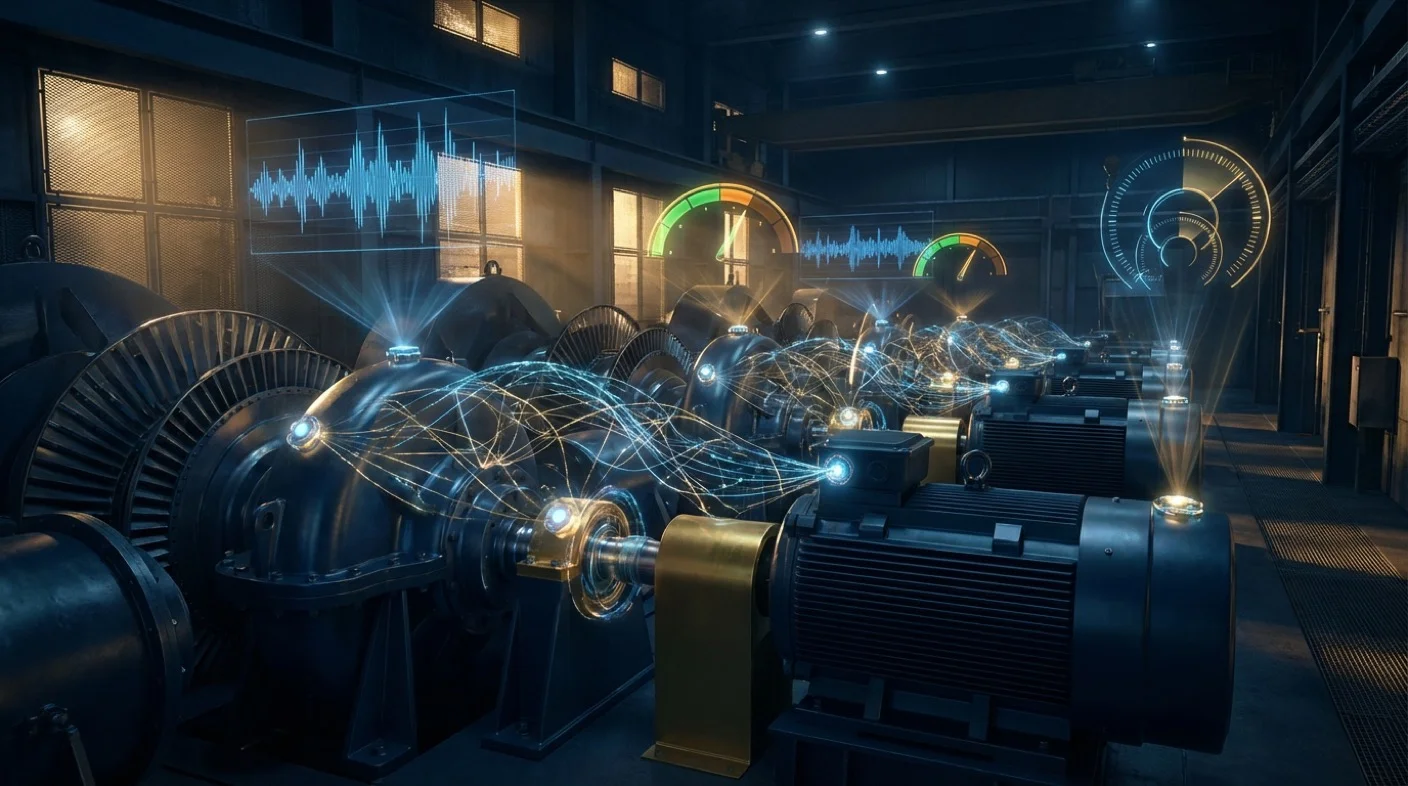
- Enterprises that adopt AI-driven manufacturing AI predictive maintenance (PdM) can reduce maintenance costs by an average of 25–30% while decreasing unplanned downtime by 70–75%[5]
- Deep learning-based fault diagnosis models (such as convolutional neural networks + time-frequency analysis) have achieved over 99% classification accuracy in rotating machinery fault detection for bearings and gearboxes[6]
- In remaining useful life (RUL) prediction, deep convolutional networks have reduced RMSE to 12–15 cycles on the NASA C-MAPSS turbofan engine dataset, significantly outperforming traditional physics-based models[3]
- From HVAC AI, construction engineering to semiconductor manufacturing, cross-industry PdM applications demonstrate that wherever sensor data and failure history records exist, AI-driven predictive maintenance can deliver quantifiable ROI[1]
1. From Reactive Repair to Predictive Maintenance: The Evolution of Maintenance Strategies
Equipment maintenance is a core operational concern for all asset-intensive industries. Whether it is CNC machine tools in manufacturing, compressors in HVAC systems, tower cranes at construction sites, or turbines in power plants, unexpected equipment failures mean massive downtime losses, safety risks, and supply chain disruptions. In his classic work, Mobley[7] noted that the evolution of industrial maintenance strategies can be clearly divided into three generations:
1.1 Reactive Maintenance
"Fix it when it breaks" is the most primitive and most expensive strategy. Equipment runs until failure before repairs are initiated, resulting in production losses from unplanned downtime, high labor and parts costs from emergency repairs, and associated quality issues. Ran et al.'s survey[1] points out that the total cost of reactive maintenance is typically 2–5 times that of planned maintenance, because the costs of emergency scheduling, overtime, and expedited parts far exceed those of normal maintenance schedules. In the HVAC industry, an unexpected compressor shutdown can paralyze an entire building's air conditioning system, affecting tenant experience and contractual obligations; at construction sites, tower crane failures directly cause project delays and safety hazards.
1.2 Preventive Maintenance
"Replace parts on a schedule" is the second-generation strategy. Enterprises perform maintenance at fixed intervals based on manufacturer recommendations or historical experience (e.g., replacing bearings every 3,000 hours, cleaning filters every quarter). While this strategy does reduce the frequency of unplanned downtime, it introduces the problem of over-maintenance — many components are replaced long before reaching the end of their useful life, resulting in consumable waste and unnecessary downtime. Carvalho et al.[2] note in their systematic literature review that while preventive maintenance is stable, it cannot reflect actual equipment health status. Under different operating conditions, loads, and environmental factors, the component lifespan of identical equipment models can vary by a factor of 2–3.
1.3 Predictive Maintenance (PdM)
"Decide when to repair based on actual equipment condition" is the third-generation strategy and the core topic of this article. PdM continuously monitors equipment operational data (vibration, temperature, current, sound, etc.), uses AI models to assess equipment health status in real time, and predicts remaining useful life (RUL) before failures occur, thereby enabling "just right" maintenance scheduling. Deloitte's industry report[5] estimates that smart factories with fully implemented PdM can reduce unplanned downtime by 70%, lower maintenance costs by 25%, and extend overall equipment lifespan by 20–40%.
The core value of PdM lies not in eliminating failures — all equipment will eventually degrade — but in making failures "predictable," enabling enterprises to shift from reactive firefighting to proactive planning. This transformation has profound implications for operational resilience, safety management, and cost structures in asset-intensive industries.
2. Sensor Data Acquisition: Vibration, Temperature, Current, and Acoustics
The quality ceiling of predictive maintenance is determined by the quality of data acquisition. As Lei et al. emphasize in their survey on machinery health prognostics[4], sensor selection and deployment is the first critical decision for PdM system success — choosing the wrong sensors or improper installation positions means that even the most advanced AI algorithms cannot extract valuable fault features from low-quality data.
2.1 Vibration Sensors (Accelerometers)
Vibration analysis is the most mature and widely used technique in rotating machinery fault diagnosis. Common faults such as bearing wear, gear cracks, shaft misalignment, and blade imbalance all leave distinctive frequency signatures in vibration signals. For example, bearing outer race defects produce periodic pulses at the specific "ball pass frequency outer" (BPFO), while gear wear manifests as increased energy at the meshing frequency and its harmonics[7]. In HVAC systems, compressor vibration spectra are the most sensitive indicator of health status; in large lifting equipment at construction sites, vibration monitoring can detect structural fatigue in advance.
2.2 Temperature Sensors (Thermocouple / RTD / IR)
Temperature changes are another important signal of equipment degradation. Bearing overheating indicates insufficient lubrication or increased internal friction, while abnormal motor winding temperature rise suggests insulation deterioration. Infrared thermography (IR) can provide surface temperature distribution maps of equipment, precisely locating localized hot spots. In construction engineering, temperature monitoring of structural concrete can detect early cracks and moisture penetration; in HVAC systems, the temperature gradient of refrigerant lines and evaporators is a direct indicator of system efficiency and refrigerant leaks[1].
2.3 Current and Power Quality Sensors
Motor Current Signature Analysis (MCSA) is a non-invasive fault diagnosis technique. By monitoring the spectral changes of motor supply current, it can detect rotor bar breakage, air gap eccentricity, bearing defects, and other mechanical faults without installing additional sensors on the equipment. This method is particularly suited for existing equipment that has been operating for years and is difficult to retrofit with vibration sensors. Changes in power quality parameters (such as power factor and harmonic distortion) can also reflect changes in equipment load conditions[4].
2.4 Acoustic and Ultrasonic Sensors
The sounds generated by equipment during operation contain rich fault information. Ultrasonic detection can capture high-frequency acoustic emissions (AE) imperceptible to the human ear, and these high-frequency signals are extremely sensitive to early crack propagation, leaks, and partial discharges. In pressure vessels and piping systems, ultrasonic detection is the preferred technique for detecting micro-leaks; in HVAC systems, the ultrasonic signature of refrigerant leaks can be detected before system efficiency noticeably declines. In recent years, microphone array-based acoustic monitoring combined with deep learning has made low-cost "acoustic fault identification" possible[2].
2.5 Multi-Sensor Fusion Strategy
A single sensor can typically only capture specific types of fault signals. In practice, the most effective PdM systems employ a multi-sensor fusion strategy — simultaneously collecting vibration, temperature, current, and acoustic data and performing fusion at the feature or decision level. Ran et al.[1] show that multi-sensor fusion can improve fault detection rates by 10–15 percentage points compared to single-sensor approaches while significantly reducing false alarm rates. In resource-constrained scenarios, it is recommended to first deploy the basic combination of vibration + temperature, then gradually expand sensor types based on specific equipment failure modes.
Experience How AI Predicts Equipment Failures
Adjust equipment parameters and observe how AI assesses health and remaining life in real time
3. Feature Engineering: From Raw Signals to Fault Indicators
Raw sensor time-series data is typically noisy, high-dimensional, and difficult to feed directly into models. Feature engineering is the critical step of transforming raw signals into meaningful fault indicators. Although deep learning has the capability to "automatically learn features," in industrial PdM scenarios, feature engineering combined with domain knowledge remains an effective means of improving model accuracy and interpretability[4].
3.1 Time-Domain Features
Time-domain features are statistical measures computed directly from raw time-series signals. Common time-domain features include: Root Mean Square (RMS) reflecting the overall energy level of vibration; Peak Value and Crest Factor for detecting impulsive anomalies; Skewness and Kurtosis, which are extremely sensitive to the pulse characteristics of early bearing defects — when initial pitting occurs in a bearing, the kurtosis of the vibration signal rises significantly before the RMS shows any noticeable change[7]. These statistical measures are simple to compute, intuitive to understand, and suitable as baseline alert indicators for PdM systems.
3.2 Frequency-Domain Features
Frequency-domain analysis uses Fast Fourier Transform (FFT) to convert time-domain signals into the frequency space, revealing characteristic frequencies of different failure modes. Bearing fault frequencies (BPFI, BPFO, BSF, FTF) can be directly calculated from bearing geometry and rotational speed; when energy at the corresponding frequencies shows abnormal growth, the specific fault location can be identified. Gearbox faults manifest as characteristic patterns at the meshing frequency and its sidebands[4]. The advantage of frequency-domain analysis lies in directly associating failure modes with physical mechanisms, providing interpretable evidence for maintenance decisions.
3.3 Time-Frequency Domain Analysis
In real equipment operation, fault signals are often non-stationary — their frequency characteristics change over time. Time-frequency analysis methods such as Short-Time Fourier Transform (STFT), Wavelet Transform, and Hilbert-Huang Transform (HHT) can simultaneously preserve time and frequency information, generating two-dimensional time-frequency spectrograms. Zhang et al.[6] demonstrated that converting vibration signals into time-frequency spectrograms and then using CNN for image recognition-style fault classification can leverage both deep learning's feature extraction capability and the physical intuitiveness of time-frequency analysis, achieving excellent classification results in noisy environments. This "signal-to-image-to-CNN" paradigm has become one of the most popular methods in industrial fault diagnosis.
3.4 Health Indicator Construction
A Health Indicator (HI) synthesizes multiple features into a single value that reflects the overall degradation trend of equipment. An ideal HI should possess monotonicity (continuously increasing or decreasing with degradation), predictability (stable trends that can be extrapolated), and distinguishability (clear separation between normal and degraded states)[4]. Methods for constructing HIs include: domain knowledge-based weighted combinations, Principal Component Analysis (PCA) for dimensionality reduction, and Autoencoders that learn low-dimensional representations from high-dimensional features. The HI serves as the bridge between fault diagnosis and life prediction — with a degradation curve of the HI, one can further predict the equipment's remaining useful life.
4. Fault Classification Models: From SVM to Deep Learning
The goal of fault classification is to determine the current state of equipment based on sensor data — whether it is operating normally or what type of fault has occurred. Carvalho et al.[2] summarized the most commonly used machine learning methods in the PdM field and their applicable scenarios in their systematic literature review.
4.1 Traditional Machine Learning Methods
Support Vector Machines (SVM), with their excellent generalization capability in small-sample, high-dimensional scenarios, have long been the preferred method for industrial fault classification. Combined with the Radial Basis Function (RBF) kernel, SVM can establish effective decision boundaries in nonlinearly separable fault feature spaces. Random Forest and Gradient Boosting Decision Trees (XGBoost) perform robustly on structured tabular data (such as extracted statistical features) and provide natural interpretability through feature importance ranking — engineers can directly see which sensor features contribute most to fault determination[2]. The advantages of these traditional methods lie in fast training speed, low data volume requirements, and ease of deployment on edge devices.
4.2 Deep Learning Methods
The breakthrough of deep learning in fault classification is "end-to-end learning" — automatically extracting fault features directly from raw sensor signals (or their time-frequency spectrograms), bypassing the tedium and bottlenecks of manual feature engineering. Zhang et al.[6] proposed a fault diagnosis model combining deep convolutional networks with domain adaptation, which achieved 99.6% classification accuracy under training conditions and maintained over 95% generalization under unseen operating conditions, addressing the critical pain point of "mismatch between training and deployment environments" in industrial scenarios.
One-dimensional Convolutional Neural Networks (1D-CNN) directly process time-series vibration signals, automatically extracting local waveform patterns through convolutional kernels; two-dimensional CNNs process time-frequency spectrograms, identifying faults in an image recognition manner. Recurrent Neural Networks (RNN) and LSTM excel at capturing degradation trends in long time series, suitable for scenarios requiring consideration of equipment historical state evolution. In recent years, the self-attention mechanism of the Transformer architecture has also been introduced to fault diagnosis, demonstrating advantages in multi-sensor fusion scenarios through its global correlation modeling capability[2].
4.3 Practical Recommendations for Method Selection
In practical implementation, the selection of fault classification models should follow the principle of "data volume determines method complexity." When labeled fault samples number fewer than a few hundred, SVM and Random Forest are typically more robust choices; when labeled samples exceed several thousand and sensor channels are rich, the advantages of deep learning methods can be fully realized. Lei et al.[4] recommend a progressive strategy: first establish baseline models with traditional methods to validate data quality and business value, then gradually introduce deep learning to push performance ceilings.
5. Remaining Useful Life (RUL) Prediction
If fault classification answers "what is wrong with the equipment now," then Remaining Useful Life (RUL) prediction answers a question of greater strategic value — "how much longer can the equipment operate." RUL prediction enables maintenance teams to precisely schedule repair timing, achieving the optimal balance between safety margins and maximum utilization[4].
5.1 Physics-Based Model Approaches
Physics-based models start from the degradation mechanisms of equipment, establishing mathematical equations that describe component wear, crack propagation, or material fatigue. For example, Paris' Law describes the growth rate of metal fatigue cracks and can be used to predict the remaining life of rotating shafts. The advantage of these methods lies in strong physical interpretability and no requirement for large volumes of failure data, but the disadvantage is that each equipment type and failure mode requires a dedicated physics model, and model parameter calibration depends on precise experiments and measurements, making comprehensive applicability difficult in complex, multi-failure-mode industrial scenarios[4].
5.2 Data-Driven RUL Prediction
Data-driven methods learn degradation patterns and life distributions directly from historical run-to-failure data without requiring pre-established physics-based degradation equations. Li et al.[3] demonstrated the excellent performance of deep convolutional neural networks in RUL prediction on the NASA C-MAPSS turbofan engine degradation simulation dataset[8] — their RMSE (Root Mean Square Error) was reduced to 12–15 flight cycles, significantly outperforming traditional multi-layer perceptrons and shallow machine learning methods.
LSTM is another widely adopted architecture for RUL prediction. Its gating mechanism enables the model to selectively remember or forget information across long time series, making it particularly suited for capturing long-term equipment degradation trends. In practical applications, the combination of Bidirectional LSTM (Bi-LSTM) and attention mechanisms further improves prediction accuracy, as the attention mechanism can automatically learn the importance weights of different time steps and sensor channels for RUL prediction[3].
5.3 Hybrid Models: Physics Knowledge + Data-Driven
In recent years, hybrid methods that integrate physics knowledge with data-driven approaches have become a research frontier in RUL prediction. The core idea is to embed physics models as prior knowledge into deep learning architectures — for example, using Paris' Law degradation equations as regularization constraints for the network, or adding physics-consistency penalty terms to the loss function. Lei et al.[4] note that hybrid models retain the flexibility and accuracy of data-driven methods while improving generalization in data-scarce scenarios and the physical plausibility of prediction results. For engineers, another practical value of hybrid models is that their predictions are easier to explain and trust — "The model predicts this bearing has 200 hours remaining because the crack growth rate follows the expected trajectory of the fatigue model" is far more convincing than pure numerical output from a black-box model.
6. Anomaly Detection: Unsupervised Learning Methods
In many industrial scenarios, obtaining equipment failure data is the greatest practical obstacle for PdM. Equipment failures are statistically extreme minority events — normal operating data accounts for over 99%, while failure data is scarce and imbalanced. A more realistic situation is that many enterprises have no historical failure records at all when implementing PdM. In such scenarios, unsupervised anomaly detection provides a path that can be initiated without requiring failure labels[2].
6.1 Autoencoders
Autoencoders are one of the most practical architectures for industrial anomaly detection. Their training strategy is extremely intuitive: use only normal operating data to train the model to learn "normal" sensor data patterns; when new data is input, if the reconstruction error exceeds a threshold, it is flagged as anomalous. This "learn normal, detect deviation" strategy circumvents the fundamental problem of insufficient failure samples. Variational Autoencoders (VAE) further provide probabilistic measurement of anomaly severity, making alert threshold settings more statistically rigorous. In HVAC systems, autoencoders can learn the system's normal operating envelope from normal temperature, pressure, and flow data, and automatically trigger alerts when refrigerant leaks or compressor efficiency decline cause data to deviate from normal patterns[1].
6.2 Isolation Forest and One-Class SVM
Isolation Forest isolates data points through random binary partition trees; anomalous points are isolated more quickly (shorter path length) due to their distinctiveness. Compared to density-based methods, Isolation Forest has low computational complexity (near-linear time), making it suitable for processing high-dimensional sensor data streams. One-Class SVM constructs a compact hypersphere boundary for normal data in feature space; points falling outside this boundary are classified as anomalous[2]. These two methods are the most pragmatic starting choices during the early stages of PdM — when enterprises are just beginning to collect sensor data and failure labels have not yet been established.
6.3 Practical Challenges of Anomaly Detection
The greatest challenge for anomaly detection in industrial scenarios is false alarm rate control. If the system frequently triggers false alerts, field maintenance teams will quickly lose trust in the system ("alert fatigue"), ultimately causing genuine failure warnings to be ignored as well. Ran et al.[1] recommend adopting a multi-level alert strategy: Level 1 as "Notice" (small deviation, log but take no action), Level 2 as "Warning" (moderate deviation, schedule into next maintenance window), and Level 3 as "Urgent" (large deviation or rapidly worsening trend, immediate shutdown inspection). Additionally, anomaly detection system thresholds should be dynamically adjusted based on operating season, load conditions, and equipment age to avoid misinterpreting normal operational changes as anomalies.
7. Cross-Industry Applications: Manufacturing, HVAC, Construction, and Energy
The core technologies of AI predictive maintenance — sensor data acquisition, feature engineering, fault classification, and RUL prediction — have cross-industry universality. The differences lie in each industry's equipment types, failure modes, data availability, and maintenance organizational structures[5]. The following analyzes PdM practices across four core application industries.
7.1 Manufacturing: From Single-Machine Monitoring to Plant-Wide Smart Maintenance
Manufacturing is the most mature industry for PdM applications. CNC machine tool spindle bearing degradation monitoring, injection molding machine hydraulic system health management, and semiconductor equipment chamber contamination detection are all scenarios with proven success cases. A key characteristic of manufacturing PdM is the wide variety of equipment types with significantly different failure modes, requiring dedicated models for each equipment type. In large-scale factories, a "layered architecture" is recommended — edge devices perform real-time data preprocessing and simple alerts, while cloud platforms handle complex model training and cross-equipment cluster analysis[5]. PdM in semiconductor fabs is particularly challenging because the fault determination criteria for process equipment are extremely stringent — even minor performance deviations can cause wafer yield degradation, requiring more sensitive anomaly detection thresholds than traditional industries.
7.2 HVAC: Energy Efficiency Maintenance and Comfort Assurance
HVAC system PdM serves the dual objectives of equipment maintenance and energy efficiency. The compressor is the system's highest-failure-rate and most expensive core component; its vibration spectrum, suction/discharge pressure differential, current waveform, and refrigerant temperature differential are key input features for building fault diagnosis models. Refrigerant leaks are another high-priority monitoring target — leaks not only reduce system efficiency (increasing energy consumption by 10–30%) but also negatively impact the environment. AI models can detect early leak symptoms from subtle changes in system subcooling, superheat, and suction pressure parameters, more promptly and precisely than periodic manual leak checks. Additionally, fan shaft bearing degradation in duct systems, cooling tower fill fouling, and pump cavitation are all scenarios suited for PdM intervention[1].
7.3 Construction Engineering: Safety-First Equipment Health Management
PdM demand at construction sites is driven by two forces: safety regulatory compliance and project schedule assurance. Tower cranes, elevators, and construction hoists are high-risk equipment on sites; their failures not only affect project timelines but can also cause casualties. Vibration monitoring combined with AI analysis can detect structural fatigue, wire rope wear, and brake degradation in cranes. Tunnel Boring Machine (TBM) maintenance is another high-value scenario — TBMs cost hundreds of millions and daily downtime losses can reach several million; cutterhead wear prediction and hydraulic system health monitoring are among the most urgent PdM needs in the engineering field. Concrete pump trucks, pile drivers, and large air compressors are also common PdM targets at construction sites[7].
7.4 Energy Industry: Prognostics for Power Grids and Generation Equipment
Wind turbines, installed in remote locations with high maintenance costs, are among the energy equipment where PdM delivers the most significant benefits. Monitoring of gearboxes, main bearings, and pitch systems can shift maintenance from post-failure emergency repair to planned scheduling, combining weather forecasts to arrange optimal maintenance time windows. In power transmission and distribution systems, Dissolved Gas Analysis (DGA) of transformer oil combined with AI classifiers can detect internal insulation deterioration, partial discharge, and overheating faults. Gas turbine PdM is directly related to the scenario simulated by the NASA C-MAPSS dataset[8] — predicting turbine blade remaining useful life through multi-sensor time-series data to optimize overhaul scheduling and spare parts inventory.
8. Enterprise PdM Implementation Roadmap
AI predictive maintenance implementation is a systems engineering effort involving technology, organizational, and process transformation. Deloitte's[5] industry survey shows that among failed PdM projects, technical issues account for only 30%, with the remaining 70% attributed to organizational resistance, insufficient data quality, and lack of a clear business case. The following is a proven four-phase implementation roadmap.
8.1 Phase 1: Site Assessment and Prioritization (1–2 months)
Before investing in any technical work, you first need to answer a business question: "Which equipment has the highest cost of unplanned downtime?" We recommend using "downtime cost x failure frequency" as the prioritization metric, starting with the TOP 3 highest-value equipment. Simultaneously assess existing data infrastructure: Are there already sensors? Where is the data stored? What is its quality? Are there historical failure records? The deliverable of this phase is a business case document containing the target equipment list, data gap analysis, and expected ROI estimates.
8.2 Phase 2: Data Infrastructure (2–4 months)
Based on Phase 1 assessment results, fill sensor gaps and establish data pipelines. Key tasks include: sensor selection and installation (prioritizing vibration + temperature combinations), edge gateway deployment, data transmission protocol establishment (MQTT / OPC-UA), and time-series database setup (such as InfluxDB or TimescaleDB). Simultaneously, begin digitizing failure history records — structuring the text descriptions in work orders into machine-readable failure labels[1]. Data quality control is critical in this phase: sensor calibration, missing value handling, timestamp synchronization, and outlier filtering — these seemingly trivial tasks directly determine the performance ceiling of subsequent models.
8.3 Phase 3: Model Development and Validation (3–6 months)
After accumulating sufficient operational data (covering at least 2–3 failure cycles is recommended), begin model development. The recommended progressive approach is: first establish a rule-based alert system using statistical thresholds (e.g., RMS exceeding 3 standard deviations above the historical baseline) as the minimum viable product (MVP); then build unsupervised anomaly detection models using Isolation Forest or Autoencoders to improve alert sensitivity and specificity; finally, once sufficient failure labels have been accumulated, train supervised fault classification and RUL prediction models[2]. Model validation cannot rely solely on offline cross-validation — prospective validation must be conducted in the actual operating environment, comparing model predictions against subsequent actual failure events for a continuous validation period of at least 3 months.
8.4 Phase 4: System Integration and Organizational Change (Ongoing)
After successful technical validation, integrate the PdM system with the enterprise's existing CMMS (Computerized Maintenance Management System) or ERP system, enabling AI prediction results to directly trigger work order creation, spare parts procurement, and schedule adjustments. More critically, organizational-level change is needed: maintenance teams shift from "waiting to be notified to repair" to "proactively making decisions based on data," which requires training, incentive mechanism adjustments, and sustained management support. Deloitte's[5] research shows that successful PdM implementations typically achieve ROI on the first pilot equipment within 6–12 months, then expand to the entire plant at a pace of 2–3 additional machines per quarter.
8.5 Common Pitfalls and Countermeasures
The five most common pitfalls when enterprises implement PdM are as follows. First, data over-optimism: teams overestimate the quality and completeness of existing data — we recommend conducting at least two weeks of data quality auditing before officially launching. Second, model over-complexity: jumping straight into deep learning while ignoring the value of simpler methods, leading to extended development cycles and insufficient interpretability. Third, neglecting field validation: relying solely on offline metrics to declare model success, only to discover excessively high false alarm rates after actual deployment. Fourth, lack of maintenance team involvement: AI teams develop in isolation without incorporating field engineers' domain knowledge into model design and alert logic, causing the system to be distrusted. Fifth, no continuous iteration mechanism: after model deployment, there is no monitoring and retraining process, and performance degrades over time without anyone noticing[1].
9. Conclusion: From Cost Savings to Operational Resilience
The value of AI predictive maintenance extends far beyond maintenance cost savings. From a broader perspective, PdM is a core capability for enterprises building operational resilience — in an environment of frequent global supply chain disruptions, increasing extreme weather events, and worsening labor shortages, enterprises that can foresee and prevent equipment failures possess an irreplaceable competitive advantage.
From a technology evolution perspective, the next step for PdM is deep integration with digital twins. Digital twins not only provide a virtual-physical mapping simulation environment for PdM models but also make "what-if analysis" possible — "If we reduce this compressor's load from 85% to 70%, how much would the bearing's expected life extend?" Such questions can be answered instantly in the virtual environment, upgrading maintenance decisions from "passive prediction" to "active optimization"[1].
From cross-industry practical experience, successful PdM implementation is not purely a technical project but a systemic transformation of technology, organization, and culture. The most effective strategy is "small steps, fast iterations" — start with one high-value piece of equipment, validate business value with minimal investment, build organizational confidence, and then gradually expand. On this journey, sensors are the foundation, data is the fuel, AI models are the engine, and the people and organizations willing to embrace a data-driven decision culture are the true core driving force.
Whether it is CNC spindles in manufacturing, compressors in HVAC systems, tower cranes at construction sites, or gearboxes in wind turbines — wherever sensor data and degradation history exist, AI predictive maintenance can transform the uncertain question of "when will equipment fail" into a plannable, manageable, and optimizable engineering decision. This is not merely a technological advancement but a fundamental shift in maintenance philosophy from "reactive" to "proactive."