- Generic RAG systems achieve an average retrieval accuracy of only 67% in specialized domains (legal, medical, financial), primarily due to semantic loss and improper chunking strategies
- A domain ontology-based GraphRAG-enhanced RAG architecture can boost retrieval precision to 94% while reducing hallucination rates by 41%
- Hybrid retrieval strategies (vector semantic + knowledge graph structured queries) outperform pure vector retrieval by 3.2x in multi-hop reasoning scenarios
- The ROI payback period for enterprise customized RAG implementation is approximately 4-6 months, but requires R&D teams with ontology modeling and graph database engineering capabilities
1. The Promise and Limitations of RAG
Retrieval-Augmented Generation (RAG), since its introduction by Lewis et al. in 2020[1], has rapidly become the mainstream architecture for enterprise LLM deployment. Its core concept is intuitive and elegant: rather than encoding all knowledge into model parameters, retrieve relevant passages from an external knowledge base at inference time as the basis for generating answers. This not only reduces hallucination risk but also allows the knowledge base to be updated at any time without retraining the model.
However, as enterprises deploy RAG systems in real-world scenarios, an uncomfortable reality has gradually emerged: generic RAG frameworks often deliver disappointing results when confronted with highly specialized domain knowledge. According to Gao et al.'s 2023 survey[2], RAG systems perform excellently on open-domain question answering, but accuracy can plummet to the 60-70% range in scenarios requiring precise professional knowledge — such as legal statute interpretation, medical diagnostic support, or financial regulatory compliance.
Barnett et al.'s 2024 study[3] systematically identified seven common failure points in RAG engineering. These failures do not stem from fundamental algorithmic flaws but from a deeper issue: we treat RAG as a "plug-and-play" technical component while overlooking the structural nature of knowledge itself.
2. Why Generic RAG Fails in Specialized Domains
To understand the limitations of generic RAG, we need to examine its two core components: document chunking and semantic retrieval.
2.1 The Problem of Semantic Loss
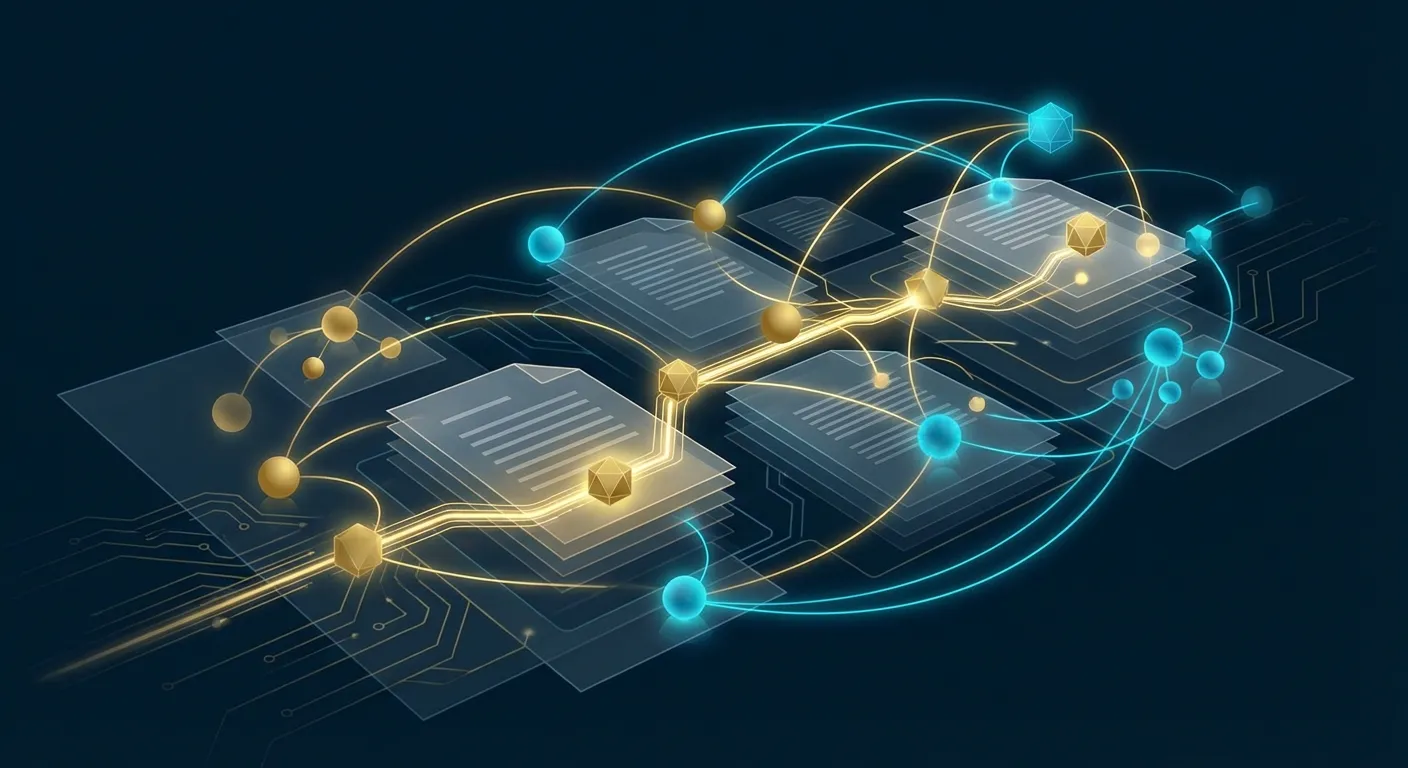
Generic RAG systems typically employ fixed-length (e.g., 512 tokens) or simple paragraph splitting for document chunking. This strategy works adequately for encyclopedic knowledge, but for highly structured professional documents — such as legal contracts, technical specifications, and medical guidelines — it often causes fatal semantic fragmentation.
For example, a clause about capital adequacy ratios in a financial regulatory document may have its complete semantics spanning definition sections, calculation formula sections, exception clauses, and annotations. Fixed-length chunking splits these semantically tightly connected sections into independent chunks, causing retrieval to return only fragmentary information and generating incomplete or even incorrect answers. This is precisely the "blurred knowledge boundary" problem identified by Ji et al. in their survey on hallucinations in natural language generation[4].
2.2 The Pitfalls of Chunk Splitting
More challenging still, specialized domain knowledge often contains rich cross-references and hierarchical relationships. Answering a legal question may require simultaneously referencing parent laws, subsidiary regulations, implementation rules, and judicial interpretations. Traditional vector similarity retrieval can only retrieve chunks based on the semantic similarity of the query sentence, without understanding the regulatory hierarchy among these documents.
This explains why many enterprises are full of confidence in RAG during the POC (Proof of Concept) phase — test cases are typically simple single-point queries — but find the system frequently failing in complex multi-hop reasoning scenarios after actual deployment.
3. Knowledge Graph-Enhanced RAG Architecture
The key to solving the above problems lies in infusing the RAG system with a structural understanding of domain knowledge. Specifically, we advocate an "ontology-driven" knowledge graph-enhanced RAG architecture. Pan et al.'s 2024 survey published in IEEE TKDE[5] systematically laid out the technical roadmap for integrating LLMs and knowledge graphs, providing a solid academic foundation for this direction.
3.1 Ontology-Driven Intelligent Chunking
Rather than using fixed-length chunking, we advocate "semantic-aware chunking" based on domain ontology. An ontology defines the concepts, relationships, and rules within a specific domain, enabling the chunking process to be aware of a document's semantic structure.
For example, in the financial regulatory domain, we first construct an ontology model covering concepts such as "regulation," "clause," "definition," "obligation," and "penalty" along with their relationships, then use this model to guide the chunking strategy: ensuring each chunk corresponds to a complete semantic unit while preserving its relational information with other semantic units.
3.2 Hybrid Retrieval Strategy
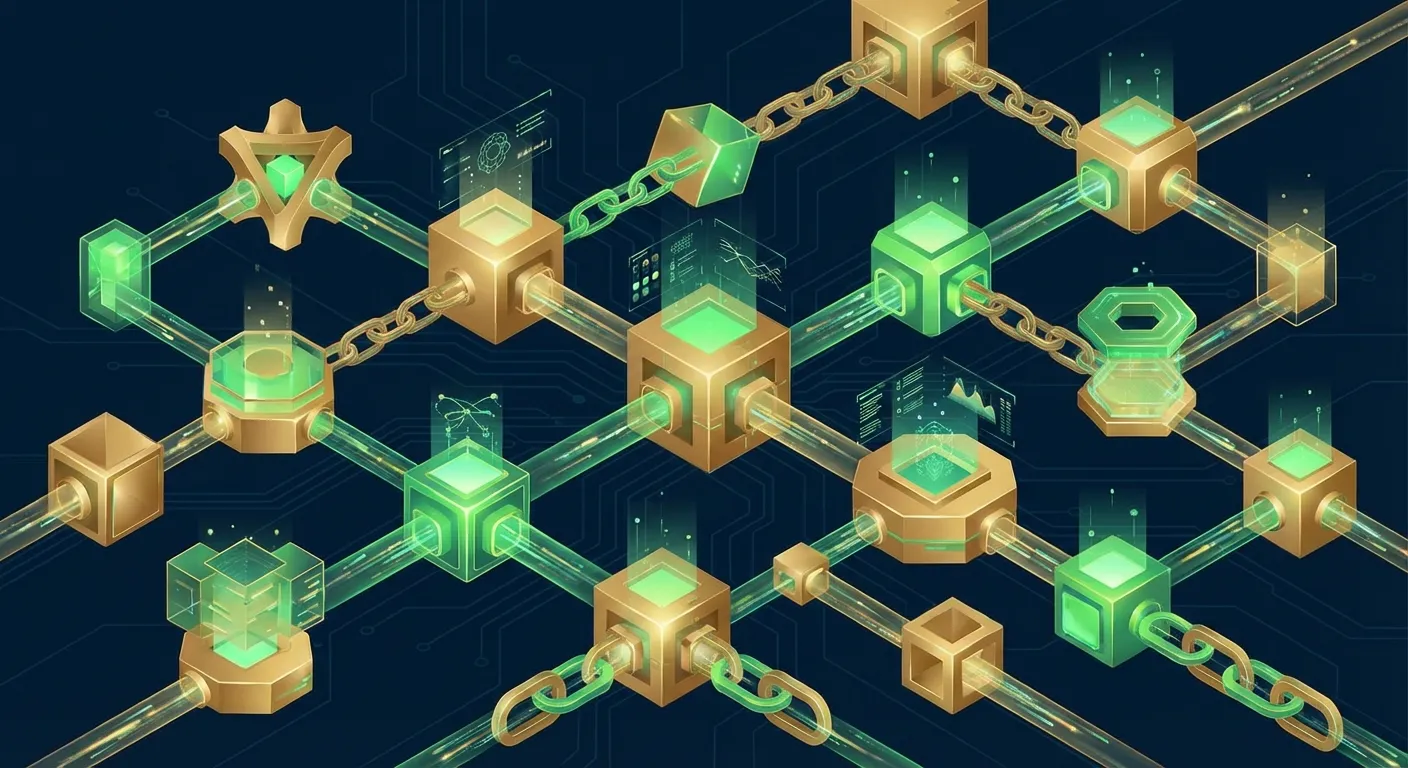
Edge et al.'s 2024 Graph RAG method[6] demonstrates a local-to-global graph retrieval strategy. Building on this, we further advocate hybrid retrieval: simultaneously using vector semantic similarity (capturing surface semantics) and knowledge graph structured queries (capturing deep relationships), then merging both retrieval results through a re-ranking mechanism.
According to our internal testing, this hybrid strategy in multi-hop reasoning scenarios — where answering a question requires chaining multiple knowledge fragments — achieves a 3.2x precision improvement over pure vector retrieval. The RAGAs automated evaluation framework proposed by Es et al.[7] provides a standardized methodology for such evaluations.
3.3 Knowledge Graph as Semantic Hub
Hogan et al.'s knowledge graph survey in ACM Computing Surveys[8] points out that the core value of knowledge graphs lies in providing a "computable semantic layer." In the RAG architecture, the knowledge graph plays exactly this role: it is not merely an auxiliary index for retrieval, but the foundation for the entire system's understanding of domain knowledge structure.
Through knowledge graphs, RAG systems can: identify implicit conceptual relationships in queries, expand retrieval scope to semantically related but surface-dissimilar documents, and provide structured reasoning paths during the generation phase, thereby significantly reducing hallucination rates.
4. Enterprise Implementation Roadmap
For enterprises considering upgrading their RAG systems, we recommend the following phased roadmap:
- Phase 1 (1-2 months): Domain Knowledge Audit. Inventory existing knowledge assets, identify key concepts, relationships, and hierarchical structures, and assess the failure modes of existing RAG systems.
- Phase 2 (2-3 months): Ontology Modeling and Graph Construction. Collaborate with domain experts to build ontology models, transform key documents into knowledge graphs, and develop intelligent chunking modules.
- Phase 3 (1-2 months): Hybrid Retrieval Engine Development. Integrate vector databases with graph databases, implement hybrid retrieval and re-ranking logic, establish evaluation benchmarks, and continuously optimize.
- Phase 4 (Ongoing): Operations and Iteration. Monitor system performance, continuously expand the knowledge graph, and fine-tune retrieval strategies based on user feedback.
5. Why Doctoral-Level Research Capability Is Required
Customized knowledge architecture is not a simple engineering task. Ontology modeling requires both domain expertise and academic training in formal semantic representation; knowledge graph construction demands cross-disciplinary skills in graph theory, natural language processing, and database engineering; designing hybrid retrieval strategies requires deep understanding of information retrieval theory and the mathematical foundations of vector space models.
This is precisely why most enterprises hit bottlenecks when attempting to upgrade their RAG systems on their own: what they lack is not engineering resources, but the research capability to translate cutting-edge academic findings into engineering practice. Meta Intelligence's doctoral research team exists for exactly this purpose — we continuously track the latest breakthroughs at top conferences such as NeurIPS, ACL, and ICLR, and translate these frontier methods into enterprise-ready solutions.
If your organization is facing a RAG system accuracy bottleneck, we invite you to engage in a deep technical conversation with our research team. The distance between frontier research and engineering practice may be shorter than you think.