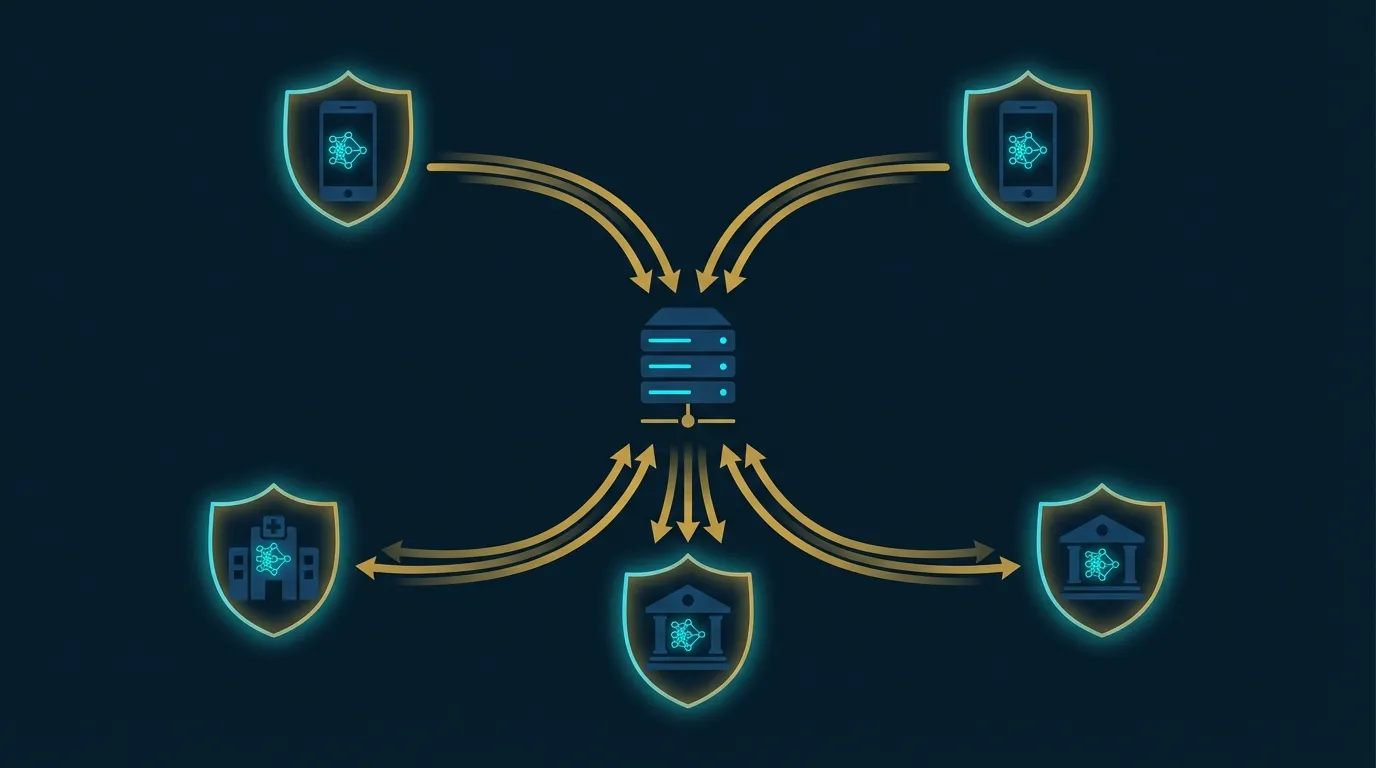
- AI plays a dual offensive-defensive role in cybersecurity — on the defensive side, SIEM + AI, UEBA, and NDR technologies have reduced threat detection times from days to seconds, while attackers leverage AI to generate highly realistic phishing emails and deepfakes, rendering traditional defenses ineffective[4]
- Enterprise adoption of large language models introduces entirely new attack surfaces — Prompt Injection, data leakage, and Model Poisoning have been listed by OWASP as the top 10 risks for LLM applications[3], requiring enterprises to establish dedicated security layers before model deployment
- Zero Trust + AI architecture is becoming the new enterprise cybersecurity standard — combining continuous verification, microsegmentation, and AI-driven anomaly behavior analysis, NIST CSF 2.0[1] has incorporated AI-assisted governance functions into its core framework
- The average cost of a global data breach has reached $4.88 million[5], while enterprises deploying AI security tools save over $2.2 million on average in incident response costs — the AI ROI of cybersecurity investments is now quantifiable
1. Why AI Cybersecurity Is a Core Enterprise Issue in 2026
The cybersecurity threat landscape in 2026 is undergoing a fundamental transformation. The Microsoft Digital Defense Report[4] indicates that AI-driven cyberattacks saw explosive growth in 2024 — attackers use generative AI to craft highly customized phishing emails, automate zero-day vulnerability discovery, and generate convincing deepfake voices for business fraud. Traditional rule-based and signature-based security defense systems are increasingly unable to cope with these constantly morphing AI attack techniques.
IBM's Cost of a Data Breach Report[5] provides a sobering set of figures: the average cost of a global data breach in 2024 reached $4.88 million, an all-time high. Yet the same report reveals a critical turning point — enterprises that extensively deployed AI and automated security tools saw incident response costs averaging $2.2 million less than those that did not, and reduced the time to identify and contain attacks by over 100 days. These figures make one thing clear: AI is no longer an optional add-on for cybersecurity but a critical differentiator determining whether enterprises can survive in the new generation of threats.
For Taiwanese enterprises, the situation is even more pressing. Due to the strategic importance of its semiconductor industry, Taiwan has long been a high-intensity target for nation-state APT (Advanced Persistent Threat) attacks. The Ministry of Digital Affairs, under the Cyber Security Management Act[8], continues to raise cybersecurity requirements for critical infrastructure and government agencies, forcing enterprises to simultaneously address both international threats and local regulatory compliance. This article systematically analyzes AI's role on both sides of the cybersecurity equation, core technology architectures, LLM-specific security risks, and how enterprises can build a modern cybersecurity system with AI at its core.
2. The Dual Nature of AI Cybersecurity: An Arms Race Between Defenders and Attackers
2.1 AI-Driven Defensive Capabilities
AI's value on the defensive side of cybersecurity manifests across three dimensions: threat detection, anomaly behavior analysis, and automated response. Traditional cybersecurity defenses rely on signature matching of known threats, essentially a "reactive defense" — only capable of detecting previously recorded attack patterns. AI introduces the possibility of "proactive defense": machine learning models learn normal behavioral baselines from massive volumes of logs and network traffic, and any activity deviating from the baseline can be flagged in real time, even for previously unseen attack patterns.
Take User and Entity Behavior Analytics (UEBA) as an example. Traditional rule engines might set static rules like "trigger an alert for any login outside business hours," but this generates massive false positives — on-call staff and cross-timezone team members' normal access would all be flagged. AI-driven UEBA builds personalized behavioral models for each user, considering dozens of feature dimensions such as login time patterns, resource access scope, data download volume, and geographic location, and only triggers alerts when behavior significantly deviates from that user's personal baseline. Gartner[2] research indicates that AI-enhanced SIEM platforms can reduce false positive rates by over 60%, allowing security analysts to focus on genuinely high-risk events.
2.2 AI-Driven Attack Techniques
However, attackers equally benefit from the proliferation of AI technology. Microsoft[4] documented several major types of AI-enhanced attacks:
- AI-Generated Phishing: Using LLMs to generate grammatically correct, contextually appropriate, and highly personalized phishing emails — traditional detection based on grammar errors and formatting anomalies has become ineffective
- Deepfake Business Fraud: Using voice synthesis and image generation technology to impersonate senior executives' voices or appearances for wire transfer instructions or confidential information extraction
- Automated Vulnerability Discovery: AI-assisted fuzzing and code analysis tools can scan large volumes of software components in short timeframes to find zero-day vulnerabilities
- Adaptive Malware: Malware with machine learning capabilities that can automatically adjust attack strategies based on the target environment to evade detection
Goodfellow et al.[6] foresaw this dynamic in their research on adversarial machine learning: when defenders use ML models for detection, attackers can use adversarial examples to defeat those detection models. This creates a continuously escalating "AI arms race," with both sides constantly strengthening their respective models and strategies.
| Dimension | AI Defensive Applications | AI Attack Techniques | Countermeasures |
|---|---|---|---|
| Email Security | NLP analysis of email intent and emotional anomalies | LLM-generated highly realistic phishing emails | Multi-layer AI filtering + user awareness training |
| Identity Authentication | Biometric + behavioral pattern verification | Deepfake voice/image forgery | Liveness detection + multi-factor authentication |
| Endpoint Protection | EDR with ML behavioral detection | Adaptive malware | AI behavioral analysis + sandbox dynamic analysis |
| Network Security | NDR traffic anomaly detection | AI-automated scanning and penetration | AI-driven microsegmentation + Zero Trust architecture |
| Vulnerability Management | AI priority ranking and remediation recommendations | AI-assisted zero-day vulnerability discovery | Continuous scanning + virtual patching |
3. Core Technologies: SIEM + AI, UEBA, NDR, and EDR
3.1 Next-Generation SIEM: From Log Aggregation to Intelligent Threat Analysis
Security Information and Event Management (SIEM) is the central nervous system of enterprise cybersecurity monitoring. The core function of traditional SIEM is to collect, normalize, and correlate logs from different security devices. However, as enterprise IT environments have exploded in complexity — hybrid cloud architectures, remote work, IoT device proliferation — the daily event volume SIEM must process has climbed from millions to billions. Gartner[2] notes that next-generation SIEM platforms are comprehensively integrating AI/ML capabilities to address this challenge.
Key AI applications in SIEM include: anomaly detection (using unsupervised learning to identify event clusters deviating from normal patterns), automated correlation analysis (linking seemingly independent low-risk events into complete attack chains), and intelligent priority ranking (dynamically ranking alerts based on asset value, threat severity, and environmental context). The results are significant: security teams are no longer drowning in thousands of low-value alerts but instead receive fewer, highly reliable threat intelligence items.
3.2 UEBA: Behavioral Baselines and Insider Threat Detection
User and Entity Behavior Analytics (UEBA) addresses the blind spots that traditional perimeter defenses cannot handle — insider threats. Whether malicious insiders, employee accounts compromised through social engineering, or stolen privileged credentials, these attackers appear as "legitimate users" from the firewall's perspective. UEBA's core concept is: even if attackers hold legitimate credentials, their behavioral patterns will inevitably differ from those of the account's true owner.
A mature UEBA system builds multi-dimensional behavioral baseline models for each user and entity (servers, applications, IoT devices) and continuously calculates deviation scores between real-time behavior and baselines. When the deviation score exceeds a dynamic threshold, the system triggers an investigation workflow. The elegance of this approach is that it does not rely on signatures of known attack patterns, making it equally effective against zero-day attacks and APTs.
3.3 NDR and EDR: ML Defense Lines at Network and Endpoint Levels
Network Detection and Response (NDR) and Endpoint Detection and Response (EDR) form the two frontline positions of AI cybersecurity defense. NDR uses deep packet inspection (DPI) and network traffic analysis (NTA) with ML models to identify anomalous patterns in encrypted traffic — even without decrypting traffic content, models can detect C2 (Command and Control) communications or data exfiltration from metadata such as packet size distributions, timing patterns, and connection behaviors.
EDR focuses on the endpoint level, combining behavioral detection engines with ML classifiers. Traditional endpoint protection relies on virus signature databases, while ML-enhanced EDR can analyze process behavior in real time on endpoints — file access patterns, memory operations, system call sequences — to determine whether activity is malicious. IBM[5] report data shows that enterprises deploying AI-enhanced EDR reduced their threat containment time by nearly 40% compared to those without.
AI Cybersecurity Technology Stack Architecture:

Data Collection Layer:
  Endpoint Logs -> EDR Agent (ML Behavioral Detection)
  Network Traffic -> NDR Sensor (Deep Traffic Analysis)
  Application Logs -> API Gateway / WAF
  Cloud Logs -> CASB / CSPM
  Identity Logs -> IAM / PAM

Intelligent Analysis Layer:
  SIEM + AI Engine
    |-- Anomaly Detection (Unsupervised ML)
    |-- Correlation Analysis (Graph Neural Networks)
    |-- Priority Ranking (Supervised Classification)
    +-- Threat Intelligence Matching (NLP + Knowledge Graph)
  UEBA Engine
    |-- User Behavioral Baseline (Statistical Modeling)
    |-- Entity Behavioral Baseline (Time-Series Analysis)
    +-- Risk Scoring (Ensemble Methods)

Response and Automation Layer:
  SOAR Platform
    |-- Automated Playbooks (Playbook Orchestration)
    |-- Incident Classification and Assignment
    |-- Automated Containment (Account Disabling / Network Segment Isolation)
    +-- Case Management and Reporting

Governance and Compliance Layer:
  |-- NIST CSF 2.0 Mapping Dashboard
  |-- Cybersecurity Regulatory Compliance Reports
  |-- Risk Quantification Metrics (FAIR Model)
  +-- Board-Level Cybersecurity Reports
4. AI-Driven Threat Intelligence
Threat Intelligence (TI) is a critical capability for enterprises transitioning from reactive to proactive defense. The traditional threat intelligence operating model involves security teams subscribing to multiple threat intelligence sources (ISACs, commercial TI platforms, open-source intelligence) and then manually integrating this intelligence into their defense systems. But this model faces two bottlenecks — the explosion in intelligence volume and the difficulty of contextualization.
AI applications in threat intelligence are fundamentally changing this ecosystem. Natural Language Processing (NLP) technology can automatically extract structured threat indicators (IoC, Indicators of Compromise) from dark web forums, security blogs, and vulnerability databases, and convert unstructured threat reports into machine-readable intelligence. Knowledge Graph technology can correlate scattered threat indicators into complete attacker profiles — linking an IP address, a set of malware hashes, and a C2 domain to the same APT group. Microsoft[4] demonstrated in its defense report how AI is used to track the tactical evolution of nation-state attackers: from initial infiltration techniques and lateral movement paths to data exfiltration channels, constructing complete TTP (Tactics, Techniques, and Procedures) maps.
For enterprise practitioners, AI-driven threat intelligence platforms can achieve the following: automated intelligence collection and normalization (eliminating cross-source format inconsistencies), contextualized priority ranking (determining which threat intelligence is most relevant based on the enterprise's industry, technology architecture, and asset value), and predictive analysis (predicting an attacker's next moves based on historical attack patterns). This transforms security teams from being "overwhelmed by intelligence" to being "empowered by intelligence."
5. LLM Security Issues: Prompt Injection, Data Leakage, and Model Poisoning
As enterprises deploy large language models at scale — from customer service chatbots to internal enterprise knowledge management Q&A, from code assistance to automated document generation — an entirely new attack surface has emerged. The OWASP Top 10 for LLM Applications published in 2025[3] provides enterprises with a systematic LLM security risk map.
5.1 Prompt Injection: The SQL Injection of the LLM Era
Prompt Injection is the most threatening security risk for LLM applications. Perez and Ribeiro[7] systematically demonstrated multiple variants of this attack in their research. Direct Prompt Injection involves attackers embedding instructions in user input to override the system prompt; Indirect Prompt Injection is more insidious — attack instructions are embedded in external content that the LLM reads (such as web pages, documents, or emails), and the model executes the malicious instructions when processing that content.
For enterprises, the risk of indirect injection is particularly severe. Consider an enterprise knowledge base system with a RAG (Retrieval-Augmented Generation) architecture: if an attacker successfully plants a malicious prompt in one of the knowledge base documents, all users querying that document could trigger unintended model behavior — leaking confidential instructions from the system prompt, outputting other users' query histories, or even being directed to phishing websites.
5.2 Data Leakage and Privacy Risks
Another major security concern with LLMs is the risk of training data and conversation data leakage. In enterprise scenarios, employees may input customer personal information, financial data, trade secrets, or source code in conversations with AI assistants. If LLM deployment is improper — for example, using public cloud APIs instead of private deployment — this sensitive information may be recorded on third-party servers. Additionally, models may "leak" sensitive content from training data through memorization mechanisms during inference.
5.3 Model Poisoning and Supply Chain Attacks
Model Poisoning refers to attackers injecting poisoned data or modifying model parameters during the model training process, causing the model to produce incorrect outputs under specific conditions. Goodfellow et al.[6] provided the theoretical foundation for this in their adversarial machine learning research. In the increasingly complex LLM supply chain ecosystem, enterprises typically use pretrained models for fine-tuning — if the pretrained model already has backdoors planted in it, the fine-tuning process may not be able to remove these hidden malicious behaviors.
| OWASP LLM Risk Category | Attack Method | Enterprise Impact | Defense Measures |
|---|---|---|---|
| Prompt Injection | Direct/indirect injection of malicious instructions | Data leakage, feature abuse | Input filtering, prompt isolation, output review |
| Insecure Output Handling | LLM output executed directly without validation | XSS, SSRF, code injection | Output sanitization, least-privilege execution environments |
| Training Data Poisoning | Contaminating training/fine-tuning datasets | Model behavior deviation, backdoor implantation | Data source verification, anomaly detection |
| Model Denial of Service | High-cost queries exhausting computational resources | Service interruption, cost explosion | Rate limiting, query complexity checks |
| Sensitive Information Disclosure | Model outputting PII from training data | Privacy regulation violations, litigation risk | Differential privacy, output filtering, PII detection |
| Excessive Agency | LLM Agent having unnecessary system access | Unauthorized operations, data tampering | Least privilege, human-in-the-loop review gates |
6. Taiwan Cybersecurity Regulations and the NIST CSF 2.0 Framework
6.1 Taiwan's Cyber Security Management Act and AI Cybersecurity
Taiwan's Cyber Security Management Act[8] has established a legal foundation for cybersecurity management across government agencies and designated non-government entities since its implementation. The act classifies regulated entities into five levels (A, B, C, D, E) based on business importance and stipulates the cybersecurity protection standards each level must meet. As AI systems become increasingly prevalent in government and critical infrastructure applications, AI cybersecurity has become an essential component of regulatory compliance.
Of particular note, the Ministry of Digital Affairs has been actively promoting the adoption of "Zero Trust Network Architecture" in recent years and has incorporated the safe use of AI technology into policy guidance. For enterprises, even if they are not directly regulated by the Cyber Security Management Act, they must still meet corresponding cybersecurity requirements if they are supply chain members for government agencies or critical infrastructure. Additionally, Taiwan's Personal Data Protection Act is becoming increasingly stringent regarding AI systems processing personal data — enterprises must simultaneously ensure that their AI cybersecurity tools themselves comply with regulatory requirements for handling personal data.
6.2 NIST CSF 2.0: A Cybersecurity Governance Framework for the AI Era
The Cybersecurity Framework 2.0[1] released by NIST in 2024 is the world's most influential cybersecurity governance framework. Compared to version 1.1, the most significant change in CSF 2.0 is the addition of the "Govern" function, elevating cybersecurity to the organizational governance and strategy level rather than viewing it merely as a technical issue. This change aligns perfectly with AI cybersecurity needs — AI cybersecurity is not just the responsibility of technical teams but requires strategic support and resource commitment from senior management.
| NIST CSF 2.0 Function | Core Objective | AI Cybersecurity Corresponding Practices |
|---|---|---|
| Govern | Establish cybersecurity governance structure and strategy | AI cybersecurity policy development, AI risk integration into enterprise ERM, security culture promotion |
| Identify | Inventory assets, risks, and vulnerabilities | AI system asset inventory, AI-specific attack surface assessment, ML model risk classification |
| Protect | Implement protective measures to reduce risk | Zero Trust architecture, AI model access control, data encryption and de-identification |
| Detect | Real-time identification of cybersecurity incidents | SIEM + AI anomaly detection, UEBA behavioral analysis, NDR network monitoring |
| Respond | Incident response procedures | SOAR automated playbooks, AI-assisted incident classification, automated containment |
| Recover | Restore normal operations | AI-assisted root cause analysis, automated remediation scripts, recovery process optimization |
Using NIST CSF 2.0 as the framework for enterprise AI cybersecurity governance offers multiple advantages: it provides an internationally recognized common language facilitating cross-departmental and cross-organizational communication; its flexible design allows enterprises to implement gradually based on their maturity level; and its high degree of correspondence with Taiwan's Cyber Security Management Act protection standards enables enterprises to simultaneously satisfy both international frameworks and local regulatory requirements.
7. Zero Trust + AI Architecture: Never Trust, Always Verify
The core principle of Zero Trust architecture is "Never Trust, Always Verify" — no longer using network boundaries as trust boundaries, but instead performing identity verification, authorization checks, and risk assessments for every access request, regardless of whether the request comes from the corporate intranet or an external network. NIST CSF 2.0[1] explicitly incorporates Zero Trust principles into recommended practices under the "Protect" function.
AI's role in Zero Trust architecture is that of an intelligent decision engine. Traditional Zero Trust implementations rely on static rules — such as "require MFA for access from unknown devices" — but static rules cannot adapt to rapidly changing threat landscapes. AI-enhanced Zero Trust architecture enables Continuous Adaptive Risk and Trust Assessment (CARTA): each access request is evaluated in real time by an AI model that calculates a risk score based on factors including user identity confidence, device security posture, access time and location, the sensitivity of requested resources, and the current overall threat landscape.
Zero Trust + AI Architecture Components:

Identity Verification Layer (Identity)
  |-- Multi-Factor Authentication (MFA)
  |-- Continuous Authentication (Behavioral Biometrics)
  +-- AI Risk-Adaptive Authentication (Low risk = single factor, High risk = mandatory multi-factor)

Device Trust Layer (Device)
  |-- Device Health Assessment (OS updates, antivirus status)
  |-- Device Compliance Check (MDM/EMM)
  +-- AI Device Anomaly Detection (Unknown device fingerprint analysis)

Network Microsegmentation
  |-- Software-Defined Perimeter (SDP)
  |-- Least-Privilege Network Access
  +-- AI Dynamic Segment Adjustment (Real-time access scope restriction based on threat posture)

Application Access Control (Application)
  |-- Role-Based Access Control (RBAC)
  |-- Attribute-Based Access Control (ABAC)
  +-- AI Access Anomaly Detection (Trigger review when deviating from normal access patterns)

Data Protection Layer (Data)
  |-- Data Classification and Labeling
  |-- Dynamic Data Masking (Dynamically adjusted based on accessor privileges)
  +-- AI Data Leakage Detection (DLP + ML Semantic Analysis)

Continuous Monitoring Layer
  |-- SIEM + AI Real-Time Analysis
  |-- UEBA Behavioral Baseline Comparison
  +-- Automated Risk Scoring and Response
In practical deployment, the construction of Zero Trust + AI should follow an "inside-out" strategy: Phase 1 focuses on identity security — deploying AI-enhanced identity governance and Privileged Access Management (PAM); Phase 2 extends to devices and networks — deploying microsegmentation and NDR; Phase 3 covers applications and data — integrating CASB, DLP, and AI access analytics. IBM[5] data shows that enterprises with fully deployed Zero Trust architecture experience data breach costs nearly $1 million lower than those without.
8. SOC Automation and SOAR Platforms
The Security Operations Center (SOC) is the command center of enterprise cybersecurity, but traditional SOCs face severe operational challenges: alert fatigue (over 90% of thousands of daily alerts are false positives), talent shortage (the global cybersecurity talent gap exceeds 3.5 million), and response delays (manual investigation and remediation take too long, allowing attackers to complete lateral movement in the meantime).
Security Orchestration, Automation and Response (SOAR) platforms were created to solve these pain points. SOAR's core value lies in automating repetitive tasks for security analysts — from alert classification, intelligence queries, and evidence collection to containment actions, all of which can be automatically executed through predefined playbooks. The addition of AI elevates SOAR from "rule-driven automation" to "intelligence-driven automation."
AI-enhanced SOAR platforms enable the following capabilities:
- Intelligent Alert Classification: AI models learn from historical incident data to automatically determine the true severity and confidence of alerts, prioritizing the most critical incidents for analysts
- Automated Investigation: When an alert triggers, SOAR automatically launches investigation playbooks — querying threat intelligence platforms, extracting relevant logs, analyzing affected assets, and mapping attack timelines — so analysts receive not a raw alert but a complete incident investigation report
- Adaptive Response: Based on incident severity and impact scope, AI automatically selects and executes appropriate containment measures — from isolating infected endpoints and disabling suspicious accounts to blocking malicious IPs, minimizing the attack's impact before human analysts even intervene
- Continuous Learning and Optimization: AI learns from every incident response, continuously optimizing playbook efficiency and response strategies, allowing SOC operational maturity to improve automatically over time
9. Enterprise AI Cybersecurity Deployment Roadmap
Integrating all the aforementioned technical capabilities into an executable deployment plan is key to successful enterprise AI cybersecurity transformation. The following roadmap is designed based on the NIST CSF 2.0[1] framework and consists of four phases:
| Phase | Timeline | Key Activities | Key Outcomes |
|---|---|---|---|
| Phase 1: Foundation | 0-6 months | Asset inventory and risk assessment, SIEM deployment/upgrade, comprehensive EDR deployment, identity security hardening (MFA + PAM) | Complete AI system asset inventory, baseline detection capabilities online, privileged account visibility |
| Phase 2: Intelligent Upgrade | 6-12 months | SIEM AI engine activation, UEBA deployment, NDR introduction, threat intelligence platform integration | 50%+ false positive rate reduction, insider threat detection capability, full network visibility |
| Phase 3: Automation & Zero Trust | 12-18 months | SOAR platform deployment, Zero Trust architecture implementation, LLM security protection layer construction | 70%+ incident response time reduction, Zero Trust access control online, LLM application security baseline |
| Phase 4: Continuous Optimization | 18-24 months | AI-driven threat hunting, regular red team/purple team exercises, compliance automation | Predictive defense capability, continuous improvement cycle, automated regulatory compliance reporting |
Each phase should be accompanied by clear KPI measurement. Phase 1's core metrics are asset coverage and baseline detection capability; Phase 2 focuses on false positive rate reduction and Mean Time to Detect (MTTD); Phase 3 measures Mean Time to Respond (MTTR) reduction and automation processing ratio; Phase 4 tracks threat hunting proactive discovery rate and overall security posture score.
It is particularly important to emphasize the parallel development of talent and organizational capabilities. Technology tool deployment is only half of AI cybersecurity — the other half is having professionals who can operate these tools. Enterprises should plan cybersecurity talent recruitment and training at every phase of the roadmap and establish cross-functional collaboration mechanisms spanning IT, cybersecurity, legal, and business departments.
10. Conclusion: From Reactive Defense to AI-Driven Proactive Security
This article has systematically outlined the complete blueprint for enterprise AI cybersecurity — from the full landscape of AI cybersecurity offense and defense, core technology stacks, LLM-specific risks, regulatory frameworks, to enterprise deployment roadmaps. Reviewing the analysis, three core messages are worth reemphasizing.
First, AI cybersecurity is not optional — it is essential. IBM[5] data clearly demonstrates that the ROI of AI cybersecurity tools is quantifiable — not only reducing incident losses but also shortening detection and response times. In an era where AI-driven attack techniques are increasingly prevalent, enterprises that do not deploy AI cybersecurity defenses are essentially fighting modern warfare with medieval weapons.
Second, LLM security is the new battleground of 2026. The OWASP[3] Top 10 LLM risks are not theoretical threats but real risks that enterprises face today. Every enterprise deploying LLM applications must simultaneously establish an LLM security protection layer — from Prompt Injection defense to data leakage protection to model supply chain security.
Third, Zero Trust + AI is the inevitable direction of architectural evolution. Traditional perimeter defense architectures can no longer address the security needs of hybrid cloud, remote work, and AI applications. NIST CSF 2.0[1] elevating the governance function to a core position reflects the paradigm shift of cybersecurity from a "technical issue" to an "organizational strategy." AI-enhanced Zero Trust architecture is not just a technology upgrade but a fundamental transformation of enterprise security culture.
For Taiwanese enterprises, driven by both international regulatory trends (NIST CSF 2.0, global AI regulations) and local regulatory requirements (the Cyber Security Management Act[8]), AI cybersecurity investment has shifted from a "cost" to a "strategic necessity." Enterprises that begin systematically building AI cybersecurity capabilities now will establish true defensive resilience in an increasingly severe threat environment.
Meta Intelligence's cybersecurity strategy team combines AI technology expertise with enterprise cybersecurity practical experience, assisting enterprises from cybersecurity posture assessment and AI cybersecurity architecture design to NIST CSF 2.0 compliance implementation, building comprehensive AI-driven cybersecurity defense systems. Contact us today and let AI become your enterprise's strongest cybersecurity ally.