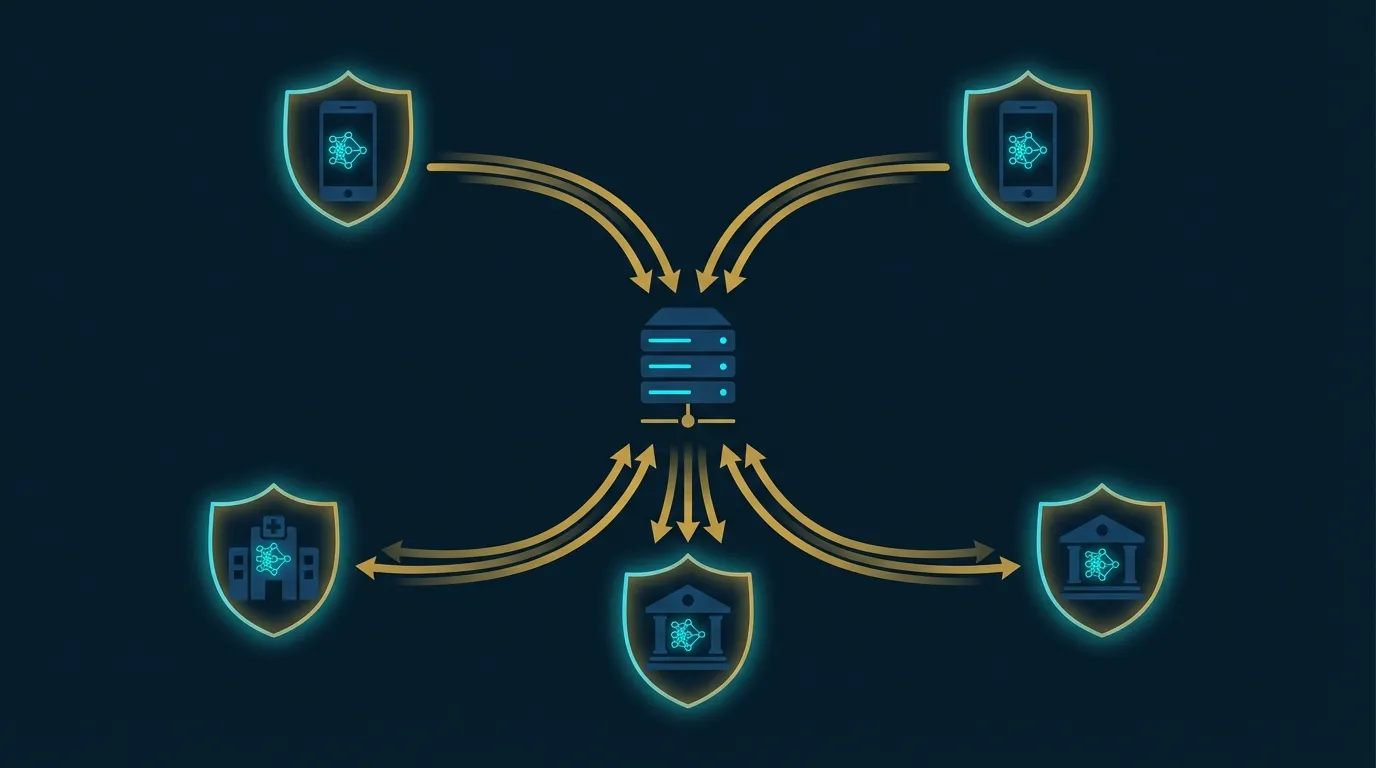
- Self-supervised learning (SSL) breaks through the scale bottleneck of manual annotation by automatically constructing supervision signals from unlabeled data — BERT's[1] masked language model and MAE's[2] masked image reconstruction are two representative paradigms
- SSL methods can be categorized into generative (MLM, MAE), contrastive (SimCLR[4], MoCo), and self-distillation (DINO[3], BYOL[10]) — all achieving breakthrough results in both NLP and CV
- The core of Foundation Models[13] is "large-scale self-supervised pre-training + downstream fine-tuning" — models like BERT, GPT[5], and ViT[9] have become the infrastructure of modern AI
- This article includes two Google Colab hands-on labs: BERT MLM prediction and sentiment classification fine-tuning, and MAE image masked reconstruction visualization — both executable directly in the browser
1. The Annotation Bottleneck: Why Self-Supervised Learning Is Key to AI Scaling
The success of deep learning relies on large volumes of high-quality labeled data, but manual annotation faces a fundamental scale bottleneck. ImageNet's 14 million labeled images required over 25,000 person-years of annotation work; expert annotation costs for medical imaging can reach tens of dollars per image. When we have billions of web pages of text and images, annotation becomes the biggest limiting factor.
Self-supervised learning (SSL) provides a breakthrough path: automatically constructing supervision signals from the structure of the data itself, allowing models to learn meaningful representations without manual annotation. Its core philosophy is —
Supervised learning:       Input x  →  Manual label y  →  Learn f(x) ≈ y
Self-supervised learning:  Input x  →  Auto-generate pseudo-label ŷ (extracted from x's structure)  →  Learn f(x̃) ≈ ŷ

Typical "pseudo-label" strategies:
  Text:    Mask some tokens, predict masked tokens (BERT MLM)
  Image:   Mask some patches, reconstruct masked pixels (MAE)
  Speech:  Mask some timesteps, predict masked speech representations (wav2vec 2.0)
  General: Two augmented views of data should map to similar representations (contrastive learning)
The power of SSL lies in unlocking the virtually unlimited unlabeled data available on the internet. BERT[1] was pre-trained using BooksCorpus + English Wikipedia (3.3 billion tokens); GPT-3[8] used a mixed corpus of 300 billion tokens. Data at these scales cannot be obtained through manual annotation, but self-supervised learning enables models to acquire rich language and world knowledge from them.
2. The SSL Landscape: From Pretext Tasks to Contrastive Learning
The development of self-supervised learning has evolved from hand-designed pretext tasks to universal frameworks[12]. Here is a classification of the current major methods:
| Category | Core Idea | NLP Representatives | CV Representatives | Advantages |
|---|---|---|---|---|
| Generative | Mask or corrupt input, reconstruct original data | BERT MLM[1], GPT CLM[5] | MAE[2], BEiT[14] | Intuitive, stable training, fine-grained representations |
| Contrastive | Pull positive pairs closer, push negative pairs apart | — | SimCLR[4], MoCo | Semantic-level representations, strong transfer ability |
| Self-Distillation | Student network predicts teacher network output | — | DINO[3], BYOL[10] | No negative samples needed, semantics emerge automatically |
| Decorrelation | Maximize independence between feature dimensions | — | Barlow Twins[17] | Conceptually simple, avoids mode collapse |
| Discriminative | Distinguish real tokens from replaced tokens | ELECTRA[16] | — | High sample efficiency, all positions learn |
Notably, the latest methods are beginning to merge multiple paradigms. DINOv2[15] simultaneously uses DINO's self-distillation objective and iBOT's masked prediction objective; BEiT[14] combines masked prediction with discrete tokenization. This hybrid trend is blurring the boundaries between method categories.
3. The Self-Supervised Revolution in Text AI: BERT and Masked Language Model
In 2018, Devlin et al.[1] proposed BERT (Bidirectional Encoder Representations from Transformer architectures), fundamentally changing the NLP research paradigm. Its core innovations were two self-supervised tasks:
Masked Language Model (MLM)
Randomly mask 15% of tokens in the input sequence and have the model predict the masked tokens. This forces the model to understand bidirectional context — unlike GPT's unidirectional autoregressive approach[5], BERT utilizes information from both left and right:
Input:  The cat [MASK] on the [MASK]
Target: Predict [MASK] → "sat", "mat"

BERT's masking strategy (to avoid pre-training-fine-tuning mismatch):
  Among the selected 15% tokens:
    80% → replaced with [MASK]        e.g., sat → [MASK]
    10% → replaced with random token  e.g., sat → dog
    10% → kept unchanged              e.g., sat → sat

MLM objective function:
  L_MLM = -E[Σ_{i∈masked} log P(x_i | x_\masked)]

BERT architecture:
  BERT-Base:  L=12, H=768,  A=12, Params=110M
  BERT-Large: L=24, H=1024, A=16, Params=340M

  Where L=Transformer layers, H=hidden dimension, A=attention heads
Next Sentence Prediction (NSP)
Given a sentence pair (A, B), predict whether B is the next sentence after A. This task aims to help the model understand inter-sentence relationships. However, subsequent research[6] found NSP's effectiveness to be limited — RoBERTa actually achieved better results after removing NSP.
The Pre-training → Fine-tuning Paradigm
BERT established the two-stage "pre-training + fine-tuning" paradigm, becoming the prototype for Foundation Models[13]:
Phase 1: Self-supervised Pre-training
  Large-scale unlabeled corpus → MLM + NSP → Universal language representations

Phase 2: Supervised Fine-tuning
  Add task-specific classification head → Fine-tune with small labeled dataset

  Text classification:    [CLS] representation → Linear → softmax
  Named entities:         Each token representation → Linear → BIO tags
  Question answering:     Each token representation → Predict start/end positions
  Sentence similarity:    [CLS] representation → cosine similarity

BERT achieved new SOTA on 11 NLP tasks,
with average improvements of 2-7 percentage points, launching the NLP pre-training era
BERT's successors continued to optimize pre-training strategies: RoBERTa[6] removed NSP and used dynamic masking with more data; ELECTRA[16] replaced MLM with "replaced token detection," allowing the model to learn from all positions (rather than just 15%), significantly improving training efficiency.
4. Self-Supervised Breakthroughs in Image AI: MAE and DINO
SSL's tremendous success in NLP inspired rapid follow-up in the CV domain. After Vision Transformer (ViT)[9] provided a unified architectural foundation, two approaches stood out in CV self-supervised learning.
Masked Autoencoder (MAE): Learning from Masking
He et al.[2] proposed MAE, elegantly transferring BERT's masked prediction concept to the visual domain, with a key insight: images have much higher information redundancy than language, so an extremely high masking ratio (75%) is needed to create a meaningful challenge:
MAE architecture:
  Image → Split into 16×16 patches → Randomly mask 75% → Only encode visible patches
                                                         ↓
  Encoder (ViT): Processes only 25% visible patches (massive compute reduction)
                                                         ↓
  Decoder (lightweight Transformer): Visible patch encodings + mask tokens → Reconstruct pixels
                                                         ↓
  Loss: MSE(reconstructed pixels, original pixels)   Computed only at masked positions

Key design choices:
  1. Asymmetric architecture: Heavy encoder + lightweight decoder (decoder used only for pre-training)
  2. Encode only visible patches: 75% masking = 4× compute speedup
  3. Pixel-level reconstruction: No extra tokenizer needed (compared to BEiT)
  4. Random masking: Each training iteration sees different masking patterns
MAE achieved 87.8% Top-1 accuracy on ImageNet-1K with purely self-supervised pre-training (ViT-Huge), surpassing previous supervised learning baselines. More importantly, its training efficiency is extremely high — by encoding only 25% of patches, memory and compute requirements are dramatically reduced.
DINO: Semantics Emerging from Self-Distillation
Caron et al.[3] proposed DINO (self-distillation with no labels), taking a different approach — self-distillation. Its most stunning finding was that self-supervised ViT attention maps automatically learn semantic segmentation without any pixel-level annotation:
DINO architecture:
  Student network g_θs  ←── Gradient update
  Teacher network g_θt  ←── Exponential moving average (EMA): θt ← λθt + (1-λ)θs

  Training flow:
  1. Same image → Two sets of different data augmentations (crops)
     - Global crops (224×224): 2
     - Local crops (96×96):  several
  2. Teacher processes global crops → softmax(g_θt(x) / τ_t)  (τ_t small → sharp distribution)
  3. Student processes all crops → softmax(g_θs(x) / τ_s)
  4. Loss: Cross-entropy H(p_teacher, p_student)

  Key: Student on local crops must predict teacher output on global crops
       → Forces model to understand global semantics from local views

DINO's attention maps → Automatically emerging object boundaries and semantic segmentation
  (Without any pixel-level annotation, purely emerging from self-supervised learning)
DINOv2[15] further combined self-distillation with masked prediction objectives, training on large-scale curated datasets to produce powerful universal visual features — achieving excellent performance across classification, segmentation, depth estimation, and other tasks without fine-tuning.
5. Hands-on Lab 1: BERT Masked Language Model Prediction and Fine-tuning (Google Colab)
The following experiment uses HuggingFace Transformers for two operations: (1) BERT MLM fill-mask prediction to observe the pre-trained model's language understanding capabilities; (2) fine-tuning BERT on the SST-2 sentiment classification task to experience the "pre-training → fine-tuning" paradigm.
# ============================================================
# Lab 1: BERT — MLM Masked Prediction + SST-2 Sentiment Classification Fine-tuning
# Environment: Google Colab (CPU is sufficient, GPU accelerates fine-tuning)
# ============================================================
# --- 0. Installation ---
!pip install -q transformers datasets torch

import torch
from transformers import (
    BertTokenizer, BertForMaskedLM,
    BertForSequenceClassification, Trainer, TrainingArguments
)
from datasets import load_dataset
import numpy as np

device = torch.device('cuda' if torch.cuda.is_available() else 'cpu')
print(f"Device: {device}")

# ============================================================
# Part A: MLM Fill-Mask Prediction
# ============================================================
print("\n" + "="*60)
print("Part A: BERT Masked Language Model Prediction")
print("="*60)

tokenizer = BertTokenizer.from_pretrained('bert-base-uncased')
mlm_model = BertForMaskedLM.from_pretrained('bert-base-uncased').to(device)
mlm_model.eval()

# Test sentences
test_sentences = [
    "The capital of France is [MASK].",
    "Artificial [MASK] is transforming every industry.",
    "The cat sat on the [MASK].",
    "Self-supervised learning uses [MASK] data for pre-training.",
    "BERT was developed by [MASK] AI research team.",
]

print("\n--- MLM Predictions ---")
for sentence in test_sentences:
    inputs = tokenizer(sentence, return_tensors='pt').to(device)
    mask_idx = (inputs['input_ids'] == tokenizer.mask_token_id).nonzero(as_tuple=True)[1]

    with torch.no_grad():
        outputs = mlm_model(**inputs)
        logits = outputs.logits

    mask_logits = logits[0, mask_idx[0]]
    top5 = torch.topk(mask_logits, 5)

    print(f"\nInput: {sentence}")
    print("Top-5 predictions:")
    for i, (score, idx) in enumerate(zip(top5.values, top5.indices)):
        token = tokenizer.decode([idx.item()])
        print(f"  {i+1}. {token:15s} (score: {score.item():.2f})")

# ============================================================
# Part B: SST-2 Sentiment Classification Fine-tuning
# ============================================================
print("\n" + "="*60)
print("Part B: BERT Fine-tuning on SST-2 Sentiment Classification")
print("="*60)

# --- 1. Load data ---
dataset = load_dataset("glue", "sst2")
print(f"Train: {len(dataset['train'])}, Val: {len(dataset['validation'])}")
print(f"Sample: {dataset['train'][0]}")

# --- 2. Tokenize ---
def tokenize_fn(examples):
    return tokenizer(examples['sentence'], truncation=True, padding='max_length', max_length=128)

tokenized = dataset.map(tokenize_fn, batched=True)
tokenized = tokenized.rename_column("label", "labels")
tokenized.set_format("torch", columns=["input_ids", "attention_mask", "labels"])

# Use subset to speed up demo (Colab-friendly)
small_train = tokenized["train"].shuffle(seed=42).select(range(2000))
small_val = tokenized["validation"]

# --- 3. Load model ---
model = BertForSequenceClassification.from_pretrained(
    'bert-base-uncased', num_labels=2
).to(device)

# --- 4. Training ---
def compute_metrics(eval_pred):
    logits, labels = eval_pred
    preds = np.argmax(logits, axis=-1)
    acc = (preds == labels).mean()
    return {"accuracy": acc}

training_args = TrainingArguments(
    output_dir="./bert-sst2",
    num_train_epochs=3,
    per_device_train_batch_size=32,
    per_device_eval_batch_size=64,
    eval_strategy="epoch",
    save_strategy="no",
    learning_rate=2e-5,
    weight_decay=0.01,
    logging_steps=50,
    report_to="none",
    fp16=torch.cuda.is_available(),
)

trainer = Trainer(
    model=model,
    args=training_args,
    train_dataset=small_train,
    eval_dataset=small_val,
    compute_metrics=compute_metrics,
)

print("\nFine-tuning BERT on SST-2 (2000 samples, 3 epochs)...")
trainer.train()

# --- 5. Evaluation ---
results = trainer.evaluate()
print(f"\n--- Results ---")
print(f"Validation Accuracy: {results['eval_accuracy']:.4f}")

# --- 6. Inference demo ---
print("\n--- Inference Demo ---")
test_texts = [
    "This movie is absolutely wonderful and inspiring!",
    "The film was boring, poorly acted, and a waste of time.",
    "An interesting concept but the execution was mediocre.",
    "I loved every minute of this brilliant masterpiece.",
]

model.eval()
for text in test_texts:
    inputs = tokenizer(text, return_tensors='pt', truncation=True, max_length=128).to(device)
    with torch.no_grad():
        logits = model(**inputs).logits
    pred = torch.argmax(logits, dim=-1).item()
    prob = torch.softmax(logits, dim=-1)[0]
    label = "Positive" if pred == 1 else "Negative"
    print(f"  [{label} {prob[pred]:.2%}] {text}")

print("\nLab 1 Complete!")
6. Hands-on Lab 2: MAE Image Masked Reconstruction Visualization (Google Colab)
The following experiment uses HuggingFace's pre-trained ViT-MAE model to perform masked reconstruction on real images, visualizing a three-column comparison of original, masked, and reconstructed images.
# ============================================================
# Lab 2: MAE — Image Masked Reconstruction Visualization
# Environment: Google Colab (CPU is sufficient)
# ============================================================
# --- 0. Installation ---
!pip install -q transformers torch pillow requests matplotlib

import torch
import numpy as np
import matplotlib.pyplot as plt
from PIL import Image
import requests
from transformers import ViTMAEForPreTraining, ViTMAEConfig, ViTFeatureExtractor

device = torch.device('cuda' if torch.cuda.is_available() else 'cpu')
print(f"Device: {device}")

# --- 1. Load pre-trained MAE model ---
print("Loading ViT-MAE model...")
feature_extractor = ViTFeatureExtractor.from_pretrained('facebook/vit-mae-base')
model = ViTMAEForPreTraining.from_pretrained('facebook/vit-mae-base').to(device)
model.eval()
print(f"Model params: {sum(p.numel() for p in model.parameters()):,}")

# --- 2. Load test images ---
urls = [
    "https://upload.wikimedia.org/wikipedia/commons/thumb/4/47/PNG_transparency_demonstration_1.png/280px-PNG_transparency_demonstration_1.png",
    "https://upload.wikimedia.org/wikipedia/commons/thumb/a/a7/Camponotus_flavomarginatus_ant.jpg/320px-Camponotus_flavomarginatus_ant.jpg",
]

images = []
for url in urls:
    try:
        img = Image.open(requests.get(url, stream=True, timeout=10).raw).convert('RGB')
        images.append(img)
        print(f"Loaded image: {img.size}")
    except Exception as e:
        print(f"Failed to load {url}: {e}")

# If loading fails, use synthetic images
if len(images) == 0:
    print("Using synthetic test images...")
    img = Image.fromarray(np.random.randint(0, 255, (224, 224, 3), dtype=np.uint8))
    images = [img]

# --- 3. MAE reconstruction function ---
def mae_reconstruct(model, feature_extractor, image, mask_ratio=0.75):
    """Perform MAE masked reconstruction"""
    # Preprocessing
    inputs = feature_extractor(images=image, return_tensors='pt')
    pixel_values = inputs['pixel_values'].to(device)

    # Forward pass (model internally applies random masking)
    with torch.no_grad():
        outputs = model(pixel_values)

    # Get masking information
    # ids_restore and mask determine which patches are masked
    mask = outputs.mask  # [1, num_patches], 1=masked, 0=visible
    pred = outputs.logits  # [1, num_patches, patch_size**2 * 3]

    return pixel_values, pred, mask

def visualize_reconstruction(pixel_values, pred, mask, image_size=224, patch_size=16):
    """Visualize original, masked, and reconstructed images"""
    # Calculate patch count
    num_patches_per_side = image_size // patch_size
    num_patches = num_patches_per_side ** 2

    # Original image (restored from tensor)
    original = pixel_values[0].cpu()
    # Denormalize
    mean = torch.tensor(feature_extractor.image_mean).view(3, 1, 1)
    std = torch.tensor(feature_extractor.image_std).view(3, 1, 1)
    original = original * std + mean
    original = original.clamp(0, 1).permute(1, 2, 0).numpy()

    # Reconstructed image (assembled from patch predictions)
    pred_patches = pred[0].cpu()  # [num_patches, patch_size**2 * 3]
    # Rearrange into image
    pred_img = pred_patches.reshape(num_patches_per_side, num_patches_per_side,
                                     patch_size, patch_size, 3)
    pred_img = pred_img.permute(0, 2, 1, 3, 4).reshape(image_size, image_size, 3)
    pred_img = pred_img.numpy()
    # Denormalize
    pred_img = pred_img * feature_extractor.image_std + feature_extractor.image_mean
    pred_img = np.clip(pred_img, 0, 1)

    # Masked image (gray fill for masked regions)
    mask_np = mask[0].cpu().numpy()  # [num_patches]
    masked_img = original.copy()
    for i in range(num_patches):
        if mask_np[i] == 1:  # masked
            row = i // num_patches_per_side
            col = i % num_patches_per_side
            r_start, r_end = row * patch_size, (row + 1) * patch_size
            c_start, c_end = col * patch_size, (col + 1) * patch_size
            masked_img[r_start:r_end, c_start:c_end] = 0.5  # gray

    # Combined image: masked positions use reconstruction, visible positions use original
    combined = original.copy()
    for i in range(num_patches):
        if mask_np[i] == 1:
            row = i // num_patches_per_side
            col = i % num_patches_per_side
            r_start, r_end = row * patch_size, (row + 1) * patch_size
            c_start, c_end = col * patch_size, (col + 1) * patch_size
            combined[r_start:r_end, c_start:c_end] = pred_img[r_start:r_end, c_start:c_end]

    mask_ratio = mask_np.sum() / len(mask_np)

    return original, masked_img, combined, mask_ratio

# --- 4. Run reconstruction and visualize ---
n_images = len(images)
fig, axes = plt.subplots(n_images, 3, figsize=(15, 5 * n_images))
if n_images == 1:
    axes = axes[np.newaxis, :]

for idx, img in enumerate(images):
    pixel_values, pred, mask = mae_reconstruct(model, feature_extractor, img)
    original, masked_img, combined, mask_ratio = visualize_reconstruction(pixel_values, pred, mask)

    axes[idx, 0].imshow(original)
    axes[idx, 0].set_title(f'Original Image', fontsize=13)
    axes[idx, 0].axis('off')

    axes[idx, 1].imshow(masked_img)
    axes[idx, 1].set_title(f'Masked ({mask_ratio:.0%} patches hidden)', fontsize=13)
    axes[idx, 1].axis('off')

    axes[idx, 2].imshow(combined)
    axes[idx, 2].set_title('Reconstruction (masked patches filled)', fontsize=13)
    axes[idx, 2].axis('off')

plt.suptitle('MAE: Masked Autoencoder — Image Reconstruction', fontsize=16, y=1.02)
plt.tight_layout()
plt.show()

# --- 5. Mask ratio experiment ---
print("\n--- Mask Ratio Experiment ---")
print("MAE uses a 75% masking ratio. Let's observe reconstruction quality under standard masking:")

# MAE model's masking ratio is controlled by config; here we demonstrate the standard 75%
# In actual research, you can modify config.mask_ratio to test different ratios
pixel_values, pred, mask = mae_reconstruct(model, feature_extractor, images[0])
mask_np = mask[0].cpu().numpy()
visible_count = (mask_np == 0).sum()
masked_count = (mask_np == 1).sum()
total = len(mask_np)

print(f"Total patches: {total}")
print(f"Visible patches: {visible_count} ({visible_count/total:.1%})")
print(f"Masked patches: {masked_count} ({masked_count/total:.1%})")
print(f"\nMAE's design insight: Images have high spatial redundancy,")
print(f"so masking 75% of patches is needed to force the model to learn meaningful representations.")
print(f"In comparison, BERT only masks 15% of tokens —")
print(f"because language has much higher information density than images.")

print("\nLab 2 Complete!")
7. Decision Framework: How Enterprises Should Choose an SSL Strategy
Facing numerous SSL methods, enterprises need to make choices based on their data type, computational resources, and application scenarios:
| Method | Modality | Pre-training Objective | Compute Requirements | Use Cases | Downstream Transfer |
|---|---|---|---|---|---|
| BERT[1] | Text | MLM + NSP | Medium (4-16 TPU days) | Text classification, NER, QA | Fine-tuning + [CLS] classification |
| GPT[5] | Text | Autoregressive CLM | High (thousands of GPU days) | Text generation, dialogue, reasoning | Prompt / In-context |
| MAE[2] | Image | Masked patch reconstruction | Medium (ViT-L 1600 epochs) | Image classification, object detection | Full model fine-tuning |
| DINO[3] | Image | Self-distillation + multi-crop | Medium-high | Segmentation, retrieval, zero-shot | Linear probing / k-NN |
| SimCLR[4] | Image | Contrastive learning | High (requires large batch) | General visual representations | Linear probing / fine-tuning |
| wav2vec 2.0[11] | Speech | Masking + contrastive | Medium | Speech recognition, speaker identification | CTC fine-tuning |
Decision logic for choosing an SSL strategy:
Decision tree:
1. Data modality?
   ├── Text → 2a
   ├── Image → 2b
   └── Speech → wav2vec 2.0

2a. Text task type?
    ├── Understanding (classification/NER/QA) → BERT family (bidirectional encoder)
    └── Generation (summarization/dialogue/translation) → GPT family (autoregressive decoder)

2b. Amount of labeled data?
    ├── Abundant (>10K labeled samples) → MAE (best after fine-tuning)
    ├── Scarce (<1K labeled samples) → DINO (stronger at zero-shot/linear probing)
    └── Almost none → DINOv2 (frozen features + k-NN classifier)

3. Compute budget?
   ├── Limited → Use open-source pre-trained models (HuggingFace Hub)
   └── Sufficient → Continue pre-training on domain data (domain adaptation)
8. From Pre-training to Competitive Advantage: The Strategic Value of SSL
Self-supervised learning is not just a technology — it is reshaping enterprise AI strategy. The Foundation Model[13] concept reveals a trend: large-scale self-supervised pre-trained models are becoming AI infrastructure, as indispensable as electricity and the internet.
Domain-Specific Pre-Training
The most strategically valuable SSL application for enterprises is domain-specific pre-training: continuing to pre-train on proprietary unlabeled data on top of general models, building technical moats that competitors cannot easily replicate:
Domain pre-training examples:
  Biomedical:  PubMedBERT — Pre-trained on PubMed papers → Biomedical NLP SOTA
  Finance:     FinBERT — Pre-trained on financial news and reports → Sentiment analysis SOTA
  Legal:       Legal-BERT — Pre-trained on legal documents → Contract analysis
  Code:        CodeBERT — Pre-trained on code-documentation pairs → Code search/generation

  General pattern:
  Open-source base model → Continue pre-training on domain corpus → Fine-tune with small labeled data → Deploy

ROI:
  ✓ Unlock massive unlabeled data within the enterprise (documents, logs, images)
  ✓ Dramatically reduce annotation requirements (from tens of thousands down to hundreds)
  ✓ Build hard-to-replicate domain models (data as moat)
  ✓ Unified representation foundation for multiple tasks (one pre-training, many fine-tunings)
SSL Implications for Enterprise AI Strategy
For decision-makers evaluating AI investments, SSL brings three key insights:
- Data strategy pivot: The AI ROI assessment of investing in collecting large volumes of unlabeled data (rather than small volumes of precisely labeled data) is higher. Enterprises should build systematic data collection pipelines rather than expensive annotation workflows.
- Leverage effect of compute investment: A single pre-training investment can serve multiple downstream tasks. While pre-training costs are high, when amortized across dozens of application scenarios, the unit cost is far lower than training from scratch for each task.
- Strategic use of the open-source ecosystem: HuggingFace Hub hosts over 500,000 pre-trained models. Enterprises need not pre-train from scratch — selecting the closest open-source model and continuing pre-training on domain data enables rapid differentiation.
9. Conclusion and Outlook
Self-supervised learning is one of the most important paradigm shifts in AI over the past decade. From BERT's[1] masked language model to MAE's[2] masked image reconstruction, from SimCLR's[4] contrastive learning to DINO's[3] self-distillation, SSL has proven through multiple forms a core proposition: the structure of data itself contains rich supervision signals.
Reviewing the core narrative:
- Breaking the annotation bottleneck: SSL unlocks the virtually unlimited unlabeled data on the internet; the success of BERT and GPT series proves the decisive role of data scale
- A unified pre-training framework: The "mask-predict" paradigm (MLM, MAE, BEiT[14]) demonstrates remarkable universality across text and image domains
- A leap in representation quality: Self-supervised representations have matched or even surpassed supervised learning on most downstream tasks; DINO's attention maps further demonstrate the emergence of unsupervised semantic understanding
- The Foundation Model paradigm: Large-scale self-supervised pre-training[13] + lightweight fine-tuning has become the standard AI development workflow
Looking ahead, SSL development directions include: multimodal unified pre-training (such as ImageBind unifying six modalities), more efficient pre-training methods (reducing compute requirements while maintaining effectiveness), and moving from static pre-training to continual learning (models continuing to learn from new data after deployment). The Transformer architecture[7] provides a unified computational foundation across modalities, while SSL provides a unified learning paradigm across modalities — their combination is catalyzing truly universal artificial intelligence infrastructure.